
"External Match Load in Women's Collegiate Lacrosse" [Article Review]
- Whistle Performance

- Nov 10, 2025
- 3 min read
The original study on external match load in women's collegiate lacrosse fills an important void in sport performance research by objectively quantifying the physical demands placed on female athletes during competition. Given the rapid rise in women's lacrosse participation and the relatively high injury rates, especially lower extremity injuries, understanding the external loads athletes experience is crucial for enhancing training, rehabilitation, and return-to-play strategies. Prior to this investigation, there was a lack of female-specific data capturing how sport demands vary by position and across a season. This study thus provides foundational sport- and position-specific benchmarks using wearable GPS and accelerometer data collected from Division I athletes over nearly 20 games in a season. Its contribution lies in enabling coaches and clinicians to tailor load management more safely and effectively, potentially reducing injury risk while optimizing performance.
Key Results and Takeaways
Key takeaways from the study include that collegiate women's lacrosse players average approximately 4,733 meters per game, with about 12.5% of this distance covered at high-intensity speeds (>15 km/h). Midfielders were distinguished by significantly greater distances at high intensity and higher sprint and deceleration counts compared to defenders and attackers, reflecting their dual offensive and defensive responsibilities on the field. Maximum speeds increased slightly but significantly in the final third of the season, possibly indicating peak competitive efforts or fitness improvements. These positional and temporal distinctions highlight the need for individual monitoring and targeted conditioning based on role-specific demands. Compared to men’s lacrosse and other multidirectional sports like soccer or basketball, women's lacrosse players tend to cover lower total distances but spend a greater proportion of time at high intensity, underscoring unique physiological and biomechanical challenges for this population.
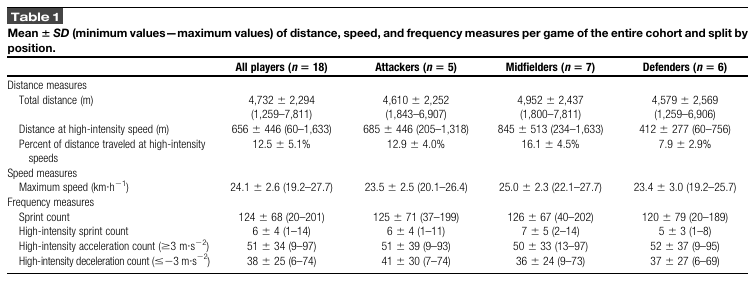
Practically, the data provide constructive guidelines for return-to-play and rehabilitation benchmarks. For example, athletes should be able to complete a rehabilitation session replicating match demands such as 5,000 meters total distance with at least 15% at high intensity and achieving at least six sprints before being cleared to compete. Emphasis is placed not only on total distance but also on the quality and biomechanical soundness of high-intensity accelerations and decelerations, given the potential injury risks associated with these movements. Coaches can integrate these benchmarks into individualized rehab periodization to safely progress load tolerance. Such quantitative targets allow for better-informed decisions about when athletes are physically ready to return to sport without undue reinjury risk. Additionally, training for different positions can be optimized knowing the specific external load profiles, training midfielders for sustained high-intensity running and tactical changes of direction, while focusing on different needs for attackers and defenders. Overall, this study lays a scientifically sound groundwork for applying GPS-derived load metrics to improve safety and performance outcomes in women’s collegiate lacrosse.

Conclusion
In conclusion, this study makes a substantial contribution to sport performance science by delivering novel, objective data on the external match loads faced by women’s collegiate lacrosse players. Its insights clarify how demands differ across playing positions and evolve over a competitive season, emphasizing the necessity of personalized load monitoring. The establishment of concrete, sport-specific benchmarks equips practitioners with vital tools to advance rehabilitation protocols and inform training practices that optimize performance while minimizing injury risk. Future work can build upon these findings by investigating larger samples across multiple teams and incorporating internal workload and biomechanical assessments, but this study marks a critical step forward in evidence-based athlete monitoring and management in women’s lacrosse.
Article PDF
Comments