
August 3, 2026
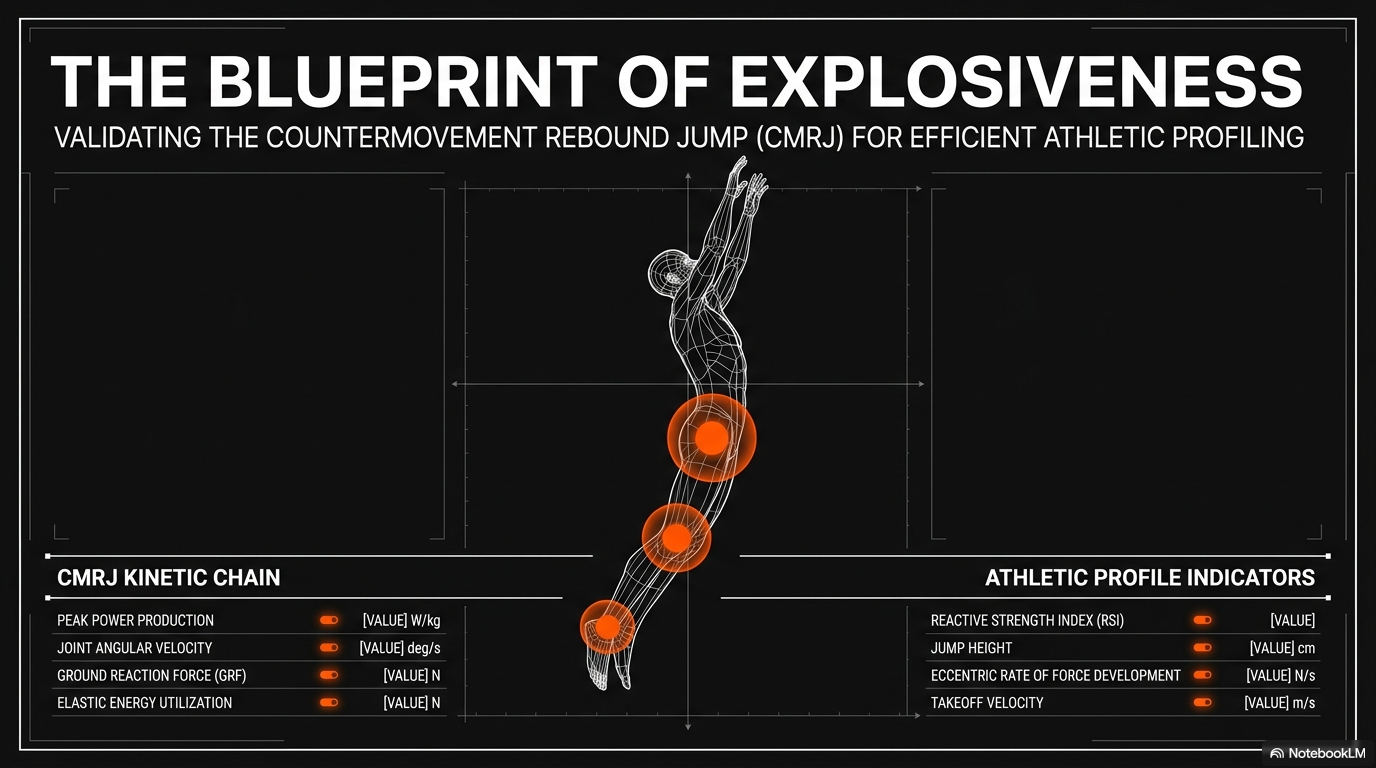
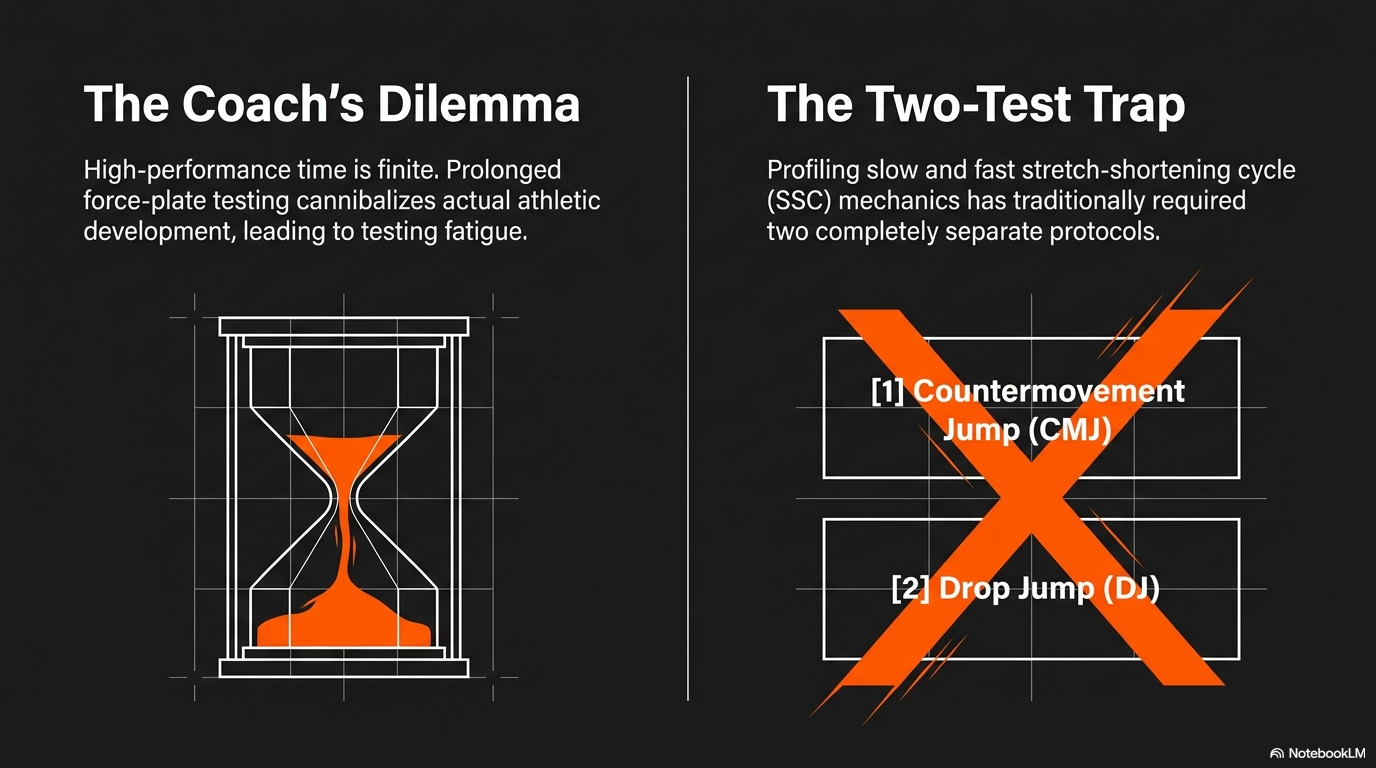
In high-performance sports, time is the ultimate limited resource. We often see athletes trapped in a cycle of "testing fatigue," where the hours spent on the force plates begin to cannibalize the time meant for actual development. Traditionally, if you wanted to see how an athlete handled both slow and fast stretch-shortening cycle (SSC) mechanics, you needed two separate protocols: the Countermovement Jump (CMJ) and the Drop Jump (DJ).
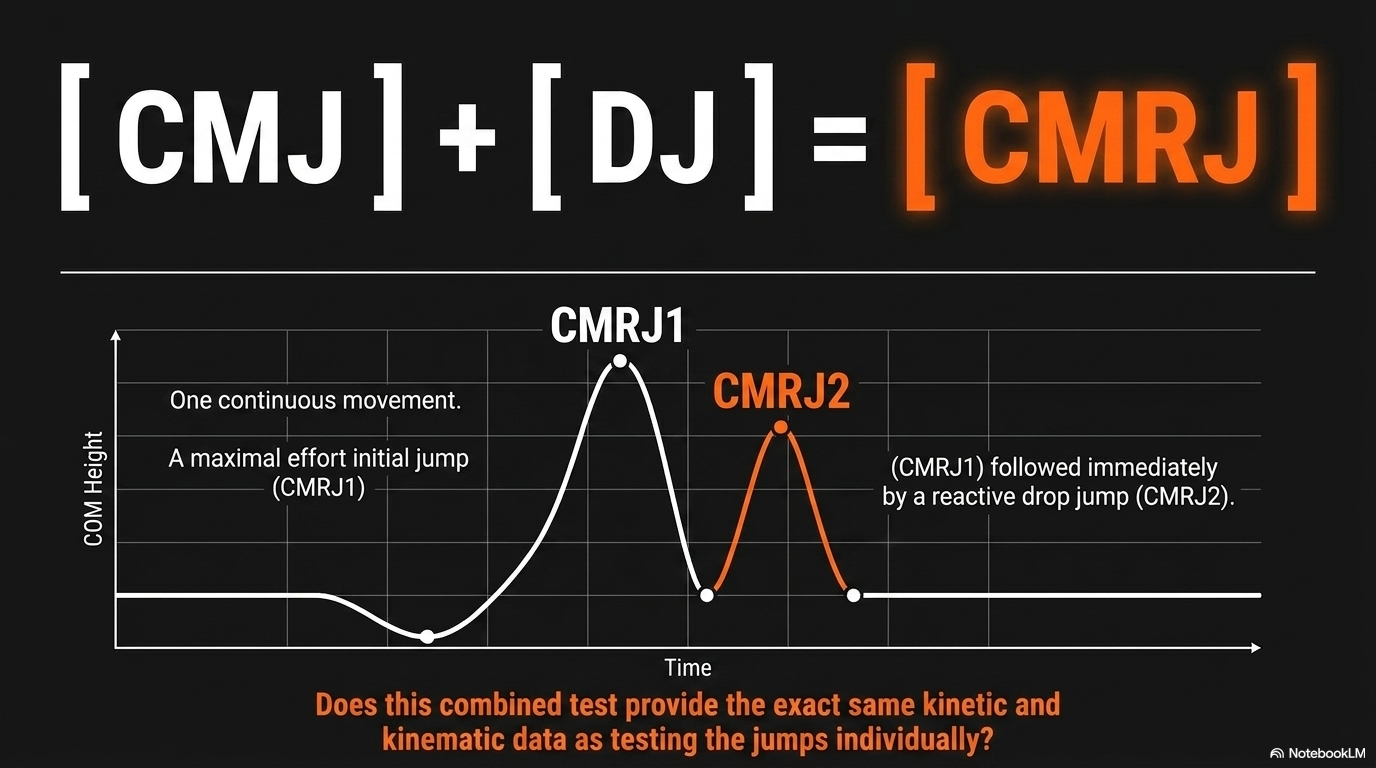
But what if we could consolidate that data without losing the resolution of the athlete’s profile? Recent biomechanical research by Xu et al. (2023) suggests that the Countermovement Rebound Jump (CMRJ) serves as a high-resolution "two-for-one" solution. By executing a maximal jump immediately followed by a reactive rebound, coaches can capture the essence of both traditional tests in a single two-second window.
The CMRJ is a deceptively simple movement: a maximal effort CMJ immediately followed by a reactive vertical rebound. The goal is simple: explode upward, land, and "ping" off the floor as fast and as high as possible.
The breakthrough for practitioners is the finding that the CMRJ provides nearly identical joint-work data to the two separate, traditional tests. In an elite environment where time is finite, this is a total game-changer. As the researchers concluded:
"The findings suggest that practitioners can utilize the CMRJ as a viable alternative to CMJ and DJ tests... [offering] valuable insights into movement characteristics and training suggestions."
We often talk about "ankle stiffness" and "hip drive," but the data from Xu et al. confirms that the knee is the undisputed king of the vertical jump. Across all jump types, the knee acts as the primary engine room and the most critical shock absorber.
When we look at the kinetic profile, the knee’s dominance is overwhelming:
While the "visual profile" of a jump shows energy demands shifting toward the ankle as movements get faster, the knee remains the primary stabilizer. This isn't just about a "bounce" off the floor; it's about a knee-driven strategy that handles the lion’s share of the load.
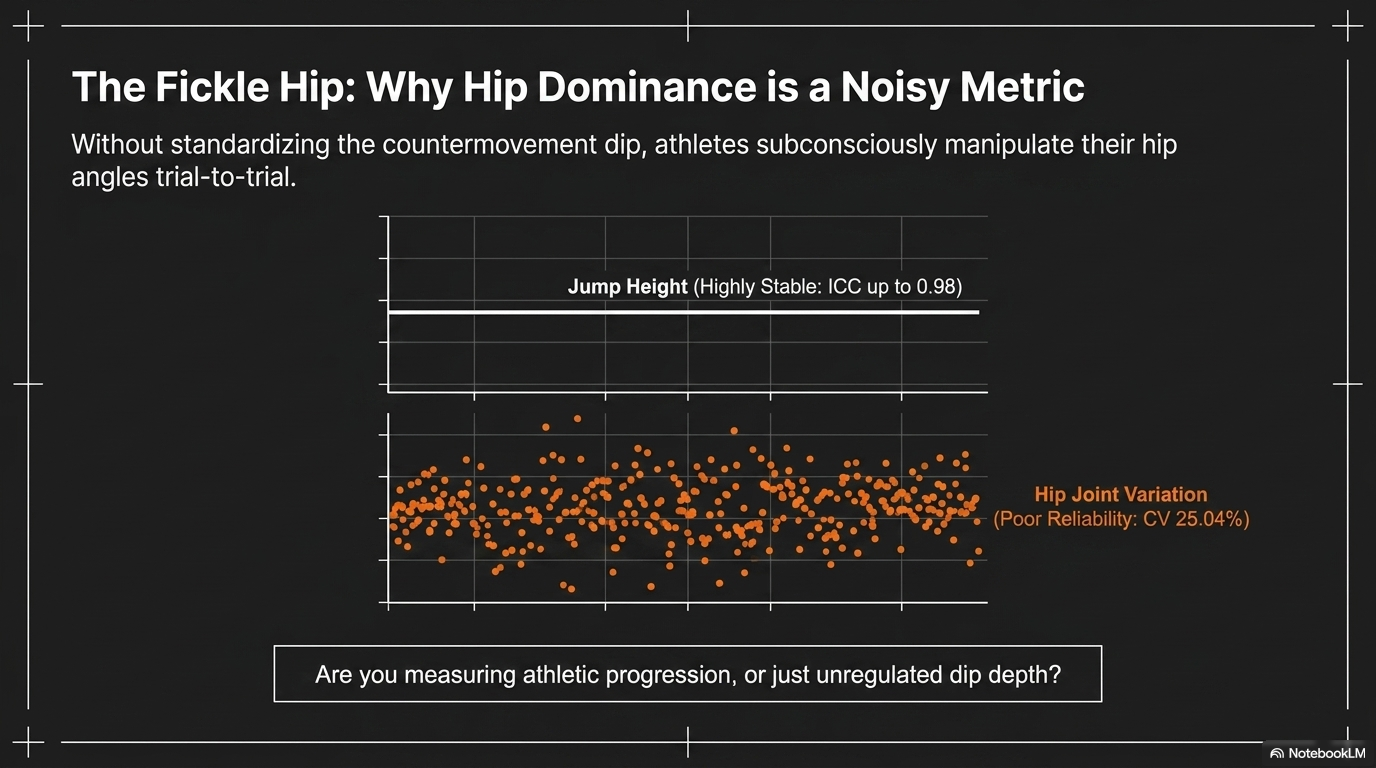
While jump height is a remarkably stable metric—boasting excellent reliability scores (ICC up to 0.98)—the hip joint is a chaotic outlier. The research revealed a "Poor to Moderate" reliability for hip metrics, with a Coefficient of Variation (CV) as high as 25.04%.
The reason for this "noise" is a critical takeaway for any coach: unregulated countermovement depth. Because athletes are rarely forced to standardize exactly how deep they "dip" during the countermovement, they subconsciously manipulate their hip angles trial-to-trial to achieve the desired height. If you are tracking "hip-dominant" metrics to see if your training program is working, you might just be measuring random variation caused by a lack of protocol standardization.
A standard Drop Jump involves stepping off a 30cm box. However, the CMRJ unmasks a hidden level of intensity. The second jump of the CMRJ requires the athlete to rebound after landing from their own first maximal jump.
Because most athletes jump higher than 30cm, the "drop" into the rebound creates a higher eccentric load than a standard box drop. The study found the knee handled significantly more negative work during the CMRJ rebound (~ -2.51 J/kg) than during a standard 30cm Drop Jump (~ -1.97 J/kg). Essentially, the CMRJ is a harder and more specific test because it forces the athlete to handle the exact forces they are capable of generating themselves.
The data unmasks a common coaching failure regarding Ground Contact Time (GCT). We often shout, "Be fast off the ground!" but without the specific stiffness to back it up, the ankle joint often slacks off. In the CMRJ rebound, the study found that ankle contribution was significantly lower than in the DJ.
The culprit? Ground Contact Times were consistently over 0.25 seconds. Biomechanically, if the GCT is over 0.25s, the test is no longer measuring "reactive strength" in a fast SSC capacity; it has become a "slow" jump. Without specific training to handle the massive eccentric loads of a self-generated drop, even active athletes shift the burden back to the knee, failing to utilize the ankle’s elastic potential.
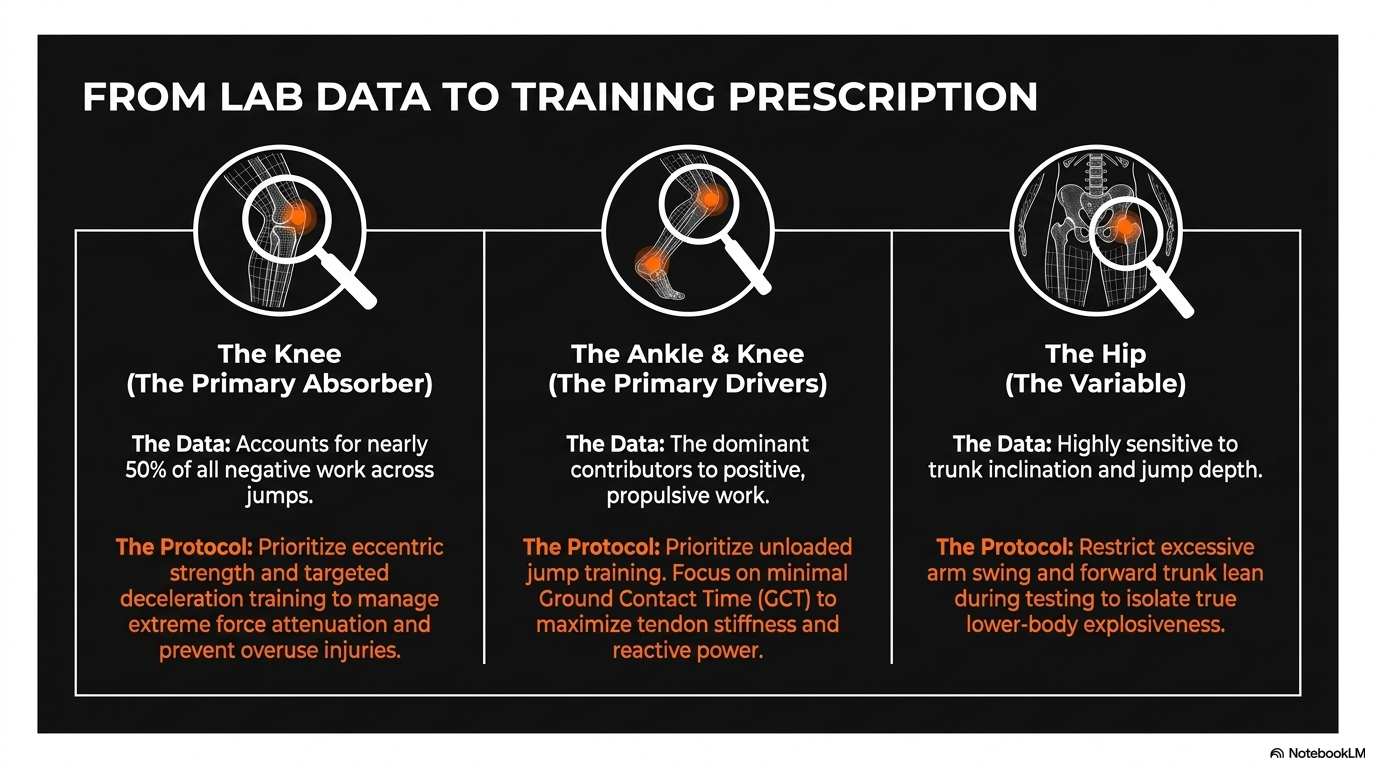
Based on the synthesis of Xu et al.’s findings, we can define three clear training priorities:
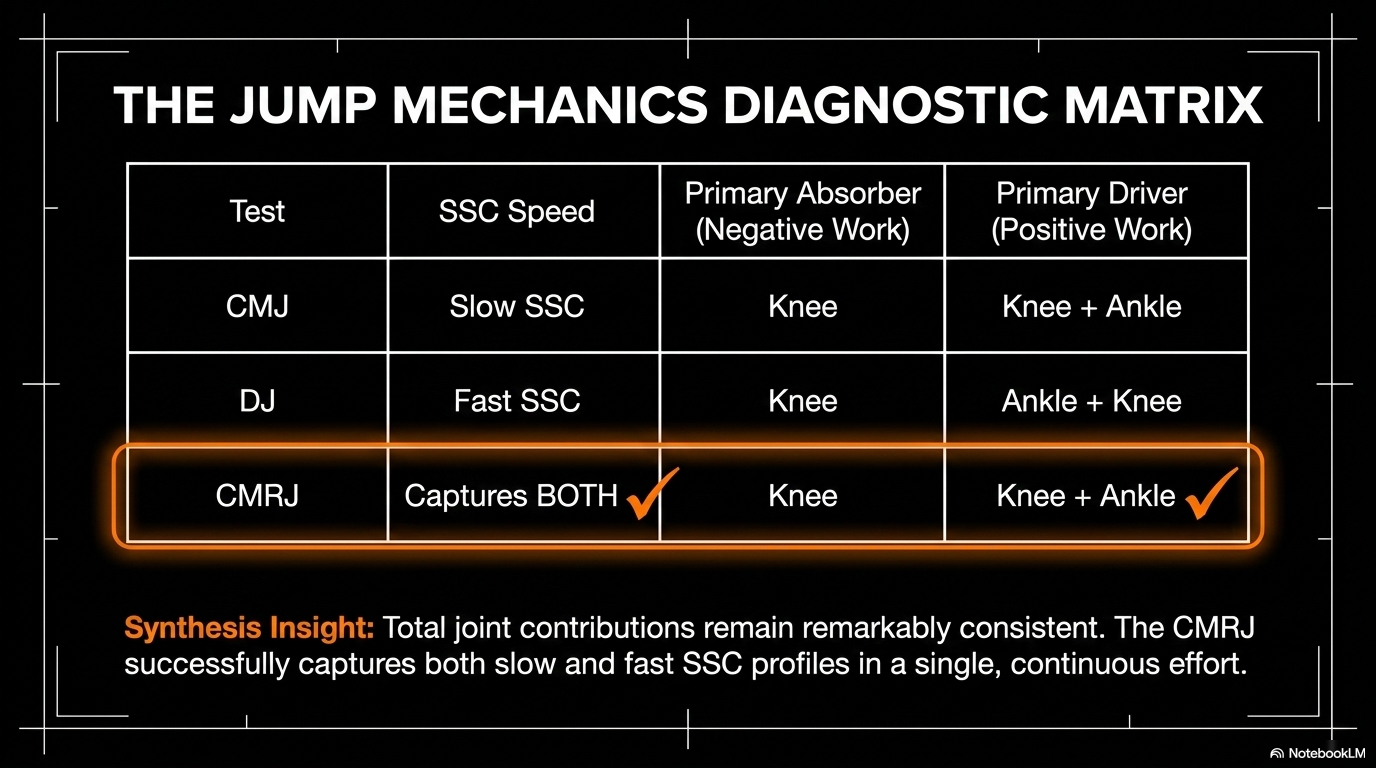
The Countermovement Rebound Jump offers a rare opportunity to simplify the sports scientist’s workflow while actually increasing the specificity of the data. It identifies whether an athlete is a "knee-dominant" powerhouse or a "slow" jumper struggling with ankle stiffness.
If you could capture the essence of an athlete's explosive power and reactive strength in a single two-second movement, why would you ever go back to testing them separately?
Article Reference
Xu, J., Turner, A., Comyns, T. M., Chavda, S., & Bishop, C. (2023a). The countermovement rebound jump: Between-session reliability and a comparison with the countermovement and drop jump tests. Journal of Strength and Conditioning Research, 38(4), e150–e159. https://doi.org/10.1519/jsc.0000000000004687 Cited by: 27