BIOMECHANICAL AND NEUROMUSCULAR PERFORMANCE REQUIREMENTS OF HORIZONTAL DECELERATION: A REVIEW WITH IMPLICATIONS FOR RANDOM INTERMITTENT MULTI-DIRECTIONAL SPORTS [Article Review]
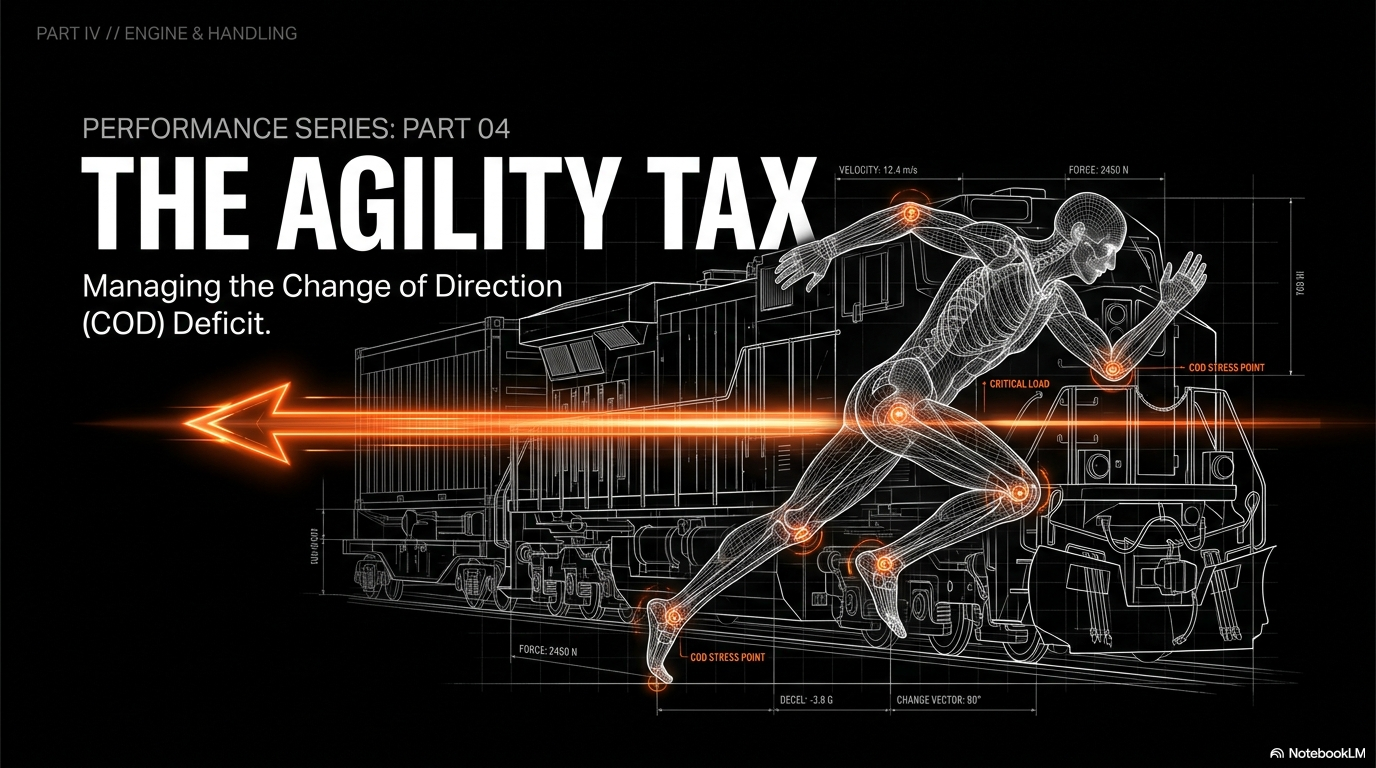
Horizontal deceleration occurs 80–104% more frequently in match play than acceleration, subjecting athletes to ground reaction forces up to 5.9 times body mass within the first 50 ms of contact. Efficient deceleration relies on a multi-step pre-braking strategy—accounting for 55–61% of change-of-direction performance time—to diffuse momentum early and protect the ACL. With eccentric quadriceps activation exceeding 150% MVC and soleus engagement locking the ankle against tibial shear, targeted eccentric strength, reactive power, and asymmetry screening are vital to absorb these forces and reduce injury risk.
read moreMarch Is Decided in October: The Basketball Baseline Question
Every basketball program tracks something. Wellness surveys. GPS numbers. Jump counts. Force plate readings. The data exists. But here is the question most programs never sit down and answer before the season starts: what are you actually doing with it?
read moreHIGH-INTENSITY ACCELERATION AND DECELERATION DEMANDS IN ELITE TEAM SPORTS COMPETITIVE MATCH PLAY: A SYSTEMATIC REVIEW AND META-ANALYSIS OF OBSERVATIONAL STUDIES
Across nearly all elite team sports, athletes perform a significantly higher frequency of high-intensity decelerations than accelerations, with soccer showing the greatest excess of braking demands. American football is the primary exception, where players execute more accelerations overall, although specific roles like offensive linemen still face heavy deceleration loads. Both acceleration and deceleration outputs drop from the first to the second half due to accumulated neuromuscular fatigue. Because intense decelerations impose severe mechanical stress and soft-tissue damage, training must prioritize targeted eccentric strength conditioning to build tissue resilience and protect players from injury.
read moreThe Real Risk of a DIY Performance Dashboard Isn't Cost. It's Liability
Most build-vs-buy conversations get stuck on money. Is a subscription worth it? Could we build it cheaper? Those are fair questions, and we've written about the true cost honestly. But they miss the risk that should actually keep an athletic director up at night.
read moreINDIVIDUALIZED Z-SCORE CLASSIFICATION OF JUMP LOAD AND ITS ASSOCIATION WITH COUNTERMOVEMENT JUMP PERFORMANCE THROUGHOUT A DIVISION I VOLLEYBALL SEASON [Article Review]
A season-long study on collegiate volleyball players found that daily spikes in jump workload caused no meaningful drops in next-day countermovement jump performance. Because well-conditioned athletes adapt easily to routine in-season training fluctuations, daily force plate testing is insensitive to standard workload changes. Performance staff should instead deploy jump testing strategically during periods of extreme overload, congested match schedules, or return to play progressions.
read moreWhat the Basketball Schedule Does to Your Top 8
In basketball, your season isn't decided only by who's on the roster. It's decided by who's available, and availability is quietly won or lost in the schedule. Two games in three nights. A cross-country flight, a time-zone change, a walk-through, and a tip-off inside seventy-two hours. A stretch of four games in eight days where the load never fully clears before the next one starts.
read moreEVALUATING STRENGTH AND CONDITIONING TESTS WITH Z SCORES: AVOIDING COMMON PITFALLS [Article Review]
Dr. Pettitt’s paper provides a practical guide for strength coaches to convert athletic test results into Z-scores using Microsoft Excel. Standardizing raw data allows coaches to fairly combine and compare performance across diverse fitness tests, adjust for body mass and timed events, and build accurate composite rankings without the mathematical flaws of simple percentile averages.
read moreTOTAL SCORE OF ATHLETICISM: HOLISTIC ATHLETE PROFILING TO ENHANCE DECISION-MAKING [Article Review]
The Total Score of Athleticism (TSA) provides a single, holistic score representing an athlete's overall physical capability by averaging standardized scores across a sport-specific fitness testing battery[. By converting raw performance metrics into z-scores (or t-scores for smaller squads), practitioners can directly compare distinct physical attributes—such as strength, speed, and aerobic capacity—relative to squad averages without unit discrepancies. Presenting these standardized metrics through Excel-based histograms and traffic-light rating systems streamlines communication across multidisciplinary coaching teams and highlights individual "windows of opportunity" to guide targeted training intervention.
read moreA Prompt Is Not a Product: The Hard Part of Building With AI
AI can build a sports dashboard in an afternoon. So why do homegrown AI systems still fail? Because AI collapsed the cost of creating software, not owning it.
read moreANALYSIS OF Z-SCORE AND TOTAL SCORE OF ATHLETICISM ON DRAFTED AND UNDRAFTED PLAYERS FROM THE NFL SCOUTING COMBINE [Article Review]
This study analyzed NFL Scouting Combine data from 2000 to 2024 to evaluate how effectively standardized Z-scores and the Total Score of Athleticism (TSA) can distinguish between drafted and undrafted players . It found that drafted players consistently score significantly higher across these standardized metrics than their undrafted peers . Crucially, calculating Z-scores within specific positional groups (skill players, big skill players, and linemen) provides much stronger predictive power than evaluating players against a general combine average . While the 40-yard dash Z-score stands out as the single best individual predictor of draft selection across all positions , upper-body metrics like the bench press are virtually irrelevant for skill players but become highly predictive in the trenches for linemen
read moreINDIVIDUAL MONITORING OF THE COUNTERMOVEMENT REBOUND JUMP IN DIVISION I FEMALE BASKETBALL PLAYERS ACROSS A COMPETITIVE SEASON: USING THE MODEL STATISTIC AND COEFFICIENT OF VARIATION APPROACH [Article Review]
This study monitored neuromuscular fatigue in 13 Division I female basketball players twice weekly over a competitive season using a countermovement rebound jump (CMRJ) test . While overall team-wide averages remained stable across the season, a single-subject repeated-measures design revealed that individual athletes experienced varying and significant levels of fatigue that group means completely obscured . The most sensitive markers of this individual exhaustion were countermovement jump height and average braking power . Ultimately, the researchers recommend using individualized, single-subject monitoring to provide sports scientists and coaches with the precise data needed to make acute, player-specific adjustments to training, practice, and recovery schedules.
read moreHow to Catch Overtraining Before It Becomes an Injury
How an LSU coach caught overtraining in 10 days; the signals, decision framework, and protocol to catch it before it becomes an injury.
read moreACUTE EFFECTS OF REPEATED SPRINTS ON PERFORMANCE MEASURES DURING THE COUNTERMOVEMENT REBOUND JUMP [Article Review]
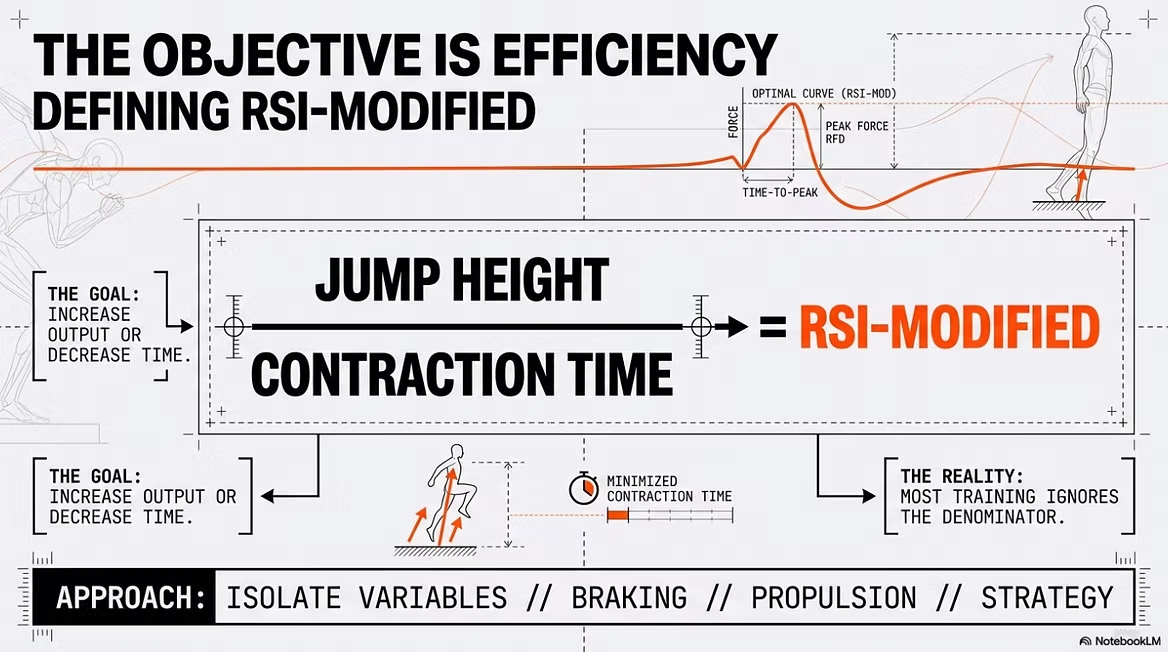
This study investigated the effects of repeated sprint-induced fatigue on countermovement rebound jump (CMRJ) performance in 24 elite male team-sport athletes . Following a repeated-sprint protocol, the athletes experienced significant, immediate reductions in key jump performance metrics, including jump heights, reactive strength index (RSI), and modified RSI (RSImod) . Conversely, strategy-based metrics like ground contact time and leg stiffness remained relatively stable under fatigue, showing limited sensitivity to acute exhaustion . Ultimately, the research concludes that CMRJ outcome metrics—specifically jump height and RSI—serve as highly accessible, noninvasive tools for coaches and sports scientists to easily monitor athlete fatigue and recovery in real-world field settings
read moreFORCE PLATE ASSESSMENT OF NEUROMUSCULAR JUMP PERFORMANCE UNDER LOADED AND UNLOADED CONDITIONS IN MILITARY PERSONNEL [Article Review]
When military personnel strap on standardized tactical gear—averaging a 10.6 kg load of body armor, helmet, and boots—their explosive movement mechanics fundamentally shift . A force plate study of 18 active-duty soldiers revealed that carrying this gear slashes countermovement jump height by 20.3% and forces them into a slower, time-dependent movement strategy where they must prolong their takeoff phase to overcome the added inertia . Fast, reactive rebound jumps are penalized even more heavily; because ground contact times are so constrained, soldiers struggle to scale their force output relative to their increased system mass, leading to a severe drop in reactive strength . While the traditional countermovement jump remains a highly reliable and robust tool for monitoring tactical readiness under load, these findings underscore that standard training is not enough: practitioners must integrate load-specific power and plyometric training to help soldiers maintain rapid force expression under real-world operational demands
read moreTHE UTILITY OF THE COUNTERMOVEMENT REBOUND JUMP FOR THE ASSESSMENT OF NEUROMUSCULAR STATUS IN NATIONAL COLLEGIATE ATHLETIC ASSOCIATION DIVISION I AMERICAN FOOTBALL PLAYERS [Article Review]
This study evaluated 29 male NCAA Division I American football players to compare how the countermovement rebound jump (CMRJ) and the standard countermovement jump (CMJ) detect post-game neuromuscular fatigue . The researchers found that the CMRJ is highly sensitive to immediate, acute fatigue, as evidenced by significant drops in average power, modified reactive strength index (RSI mod ), and jump height at 24 hours post-game, which recovered by 72 hours . On the other hand, CMJ metrics—specifically RSI mod and time to take-off—were uniquely sensitive to how an athlete's recovery trajectory was actively delayed by higher in-game physical workloads (PlayerLoad) . By combining both tests, athletic departments can efficiently flag acute fatigue, monitor workload-dependent recovery timelines, and individualize training adjustments to minimize injury risk
read moreCOUNTERMOVEMENT REBOUND JUMP: A COMPARISON OF JOINT WORK AND JOINT CONTRIBUTION TO THE COUNTERMOVEMENT AND DROP JUMP TESTS [Article Review]
This study evaluated whether the Countermovement Rebound Jump (CMRJ)—which combines an initial countermovement jump (CMRJ1) followed immediately by a reactive drop jump (CMRJ2)—can serve as a time-efficient alternative to running separate CMJ and DJ tests
read moreTHE 30-15IFT TEST-DAY PLAYBOOK: FIELD SETUP, RULES & COMMON PITFALLS [Part 4]
A test is only as good as its standardization. Setting up the 30-15IFT requires a 40-meter shuttle track with 3-meter recovery zones at the 0m, 20m, and 40m marks, along with a loud audio speaker. To keep your data pure, watch for three classic mistakes: running ahead of the beep early, cutting turns short, and jogging during the 15-second rest. Stop the test when an athlete fails to reach the zone twice in a row, and record their last successfully completed stage as their vIFT.
read moreWHY THE 30-15IFT MATTERS: THE POWER OF vIFT IN PROGRAMMING [Part 3]
Part 3 Summary: Programming with vIFT Traditional Maximal Aerobic Speed (MAS) tests only measure linear engine size, leading to workouts that over-fatigue explosive players and under-train endurance players. Because vIFT automatically accounts for change-of-direction ability, anaerobic capacity, and recovery speed, prescribing intervals at a percentage of vIFT standardizes physiological stress across the entire squad. Key Takeaway: Convert vIFT (km/h / 3.6) into meters per second to calculate exact, customized shuttle distances for every athlete, ensuring everyone gets the exact same training effect.
read moreWHO IS THE 30-15IFT FOR? AND WHO SHOULD SKIP IT [Part 2]
The 30-15IFT is the gold standard for court and field sports (soccer, basketball, rugby) because its start-stop, multi-directional nature perfectly mimics game play. It scales beautifully from youth squads to elite pros, allowing coaches to test large groups efficiently. However, it should be skipped by linear endurance athletes (who don't need change-of-direction metrics), non-running athletes (swimmers, rowers), and pure power lifters (who rely entirely on short alactic bursts). The primary takeaway: only use this test if your sport actually requires athletes to change direction under metabolic fatigue.
read moreTHE EVOLUTION OF FITNESS TESTING: THE HISTORY AND SCIENCE OF THE 30-15IFT [Part 1]
Traditional continuous fitness tests fail to capture the chaotic, stop-and-go nature of team sports . The 30-15 Intermittent Fitness Test (30-15IFT) solves this by alternating 30-second shuttle runs with 15-second rest periods . This produces a unique final speed score (V IFT ) that combines an athlete's aerobic power, anaerobic capacity, recovery speed, and change-of-direction efficiency . Ultimately, this provides coaches with a highly accurate metric to individualize and optimize high-intensity interval training (HIIT) for their players
read moreTHE LOCOMOTOR PROFILE MASTERCLASS: SYNERGIZING SPEED, MASS, AND GAME DAY DOMINACE
The Locomotor Profile Masterclass deconstructs how elite sports science evaluates on-field performance by looking past the "stopwatch illusion" and traditional weight room silos. True game-day dominance requires a perfect synergy between an athlete's Engine Dynamics (energy production and raw speed) and Handling Dynamics (force multiplication and maneuverability)
read more