

October 19, 2026
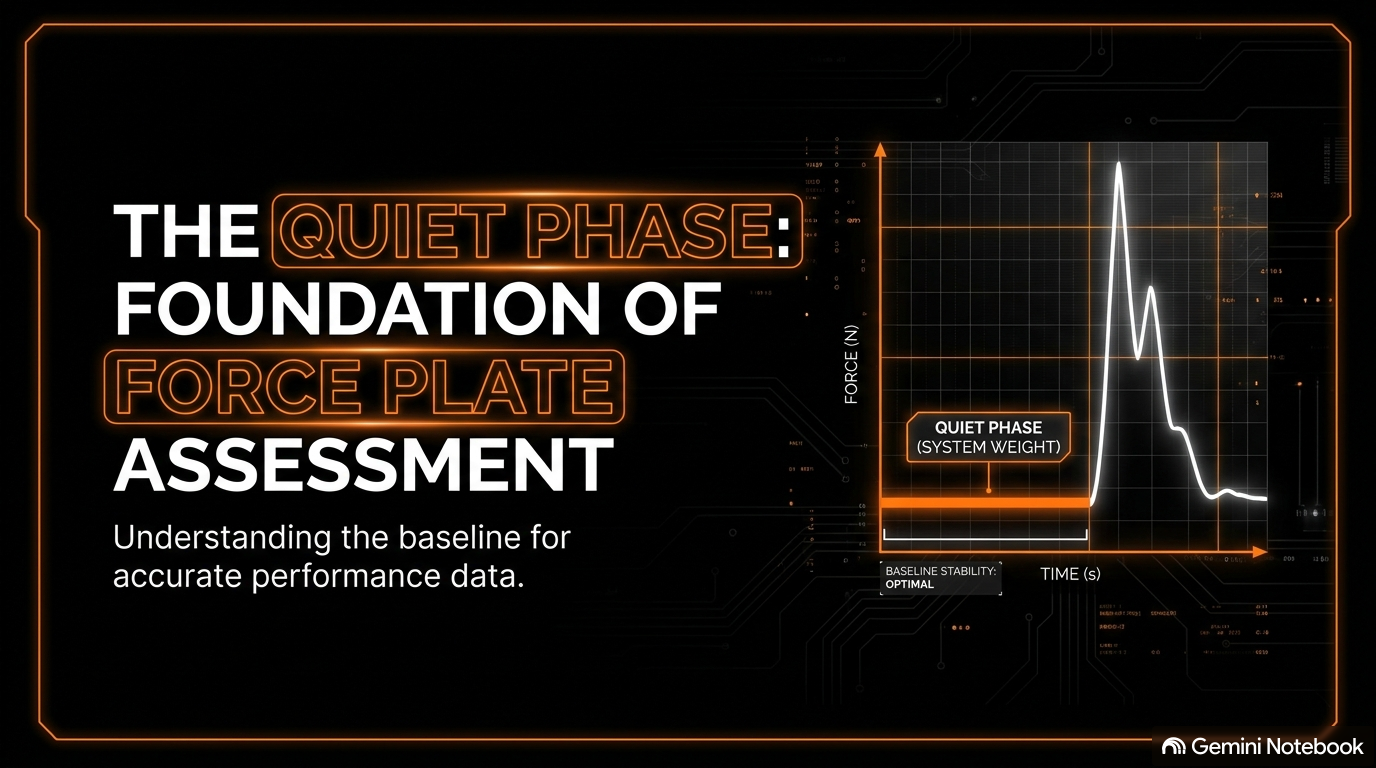
In countermovement jump (CMJ) testing, practitioners frequently direct their primary focus toward explosive performance outputs such as peak power, takeoff velocity, and jump height. However, every dynamic calculation performed by dual force plates relies on a phase where no movement occurs at all. Known as the quiet phase—or alternatively the weighing phase, stance phase, or silent period—this initial window sets the foundation for the entire assessment. Understanding how this static baseline operates is essential for maintaining test validity, cueing athletes effectively, and extracting valuable physiological data before a jump even begins.
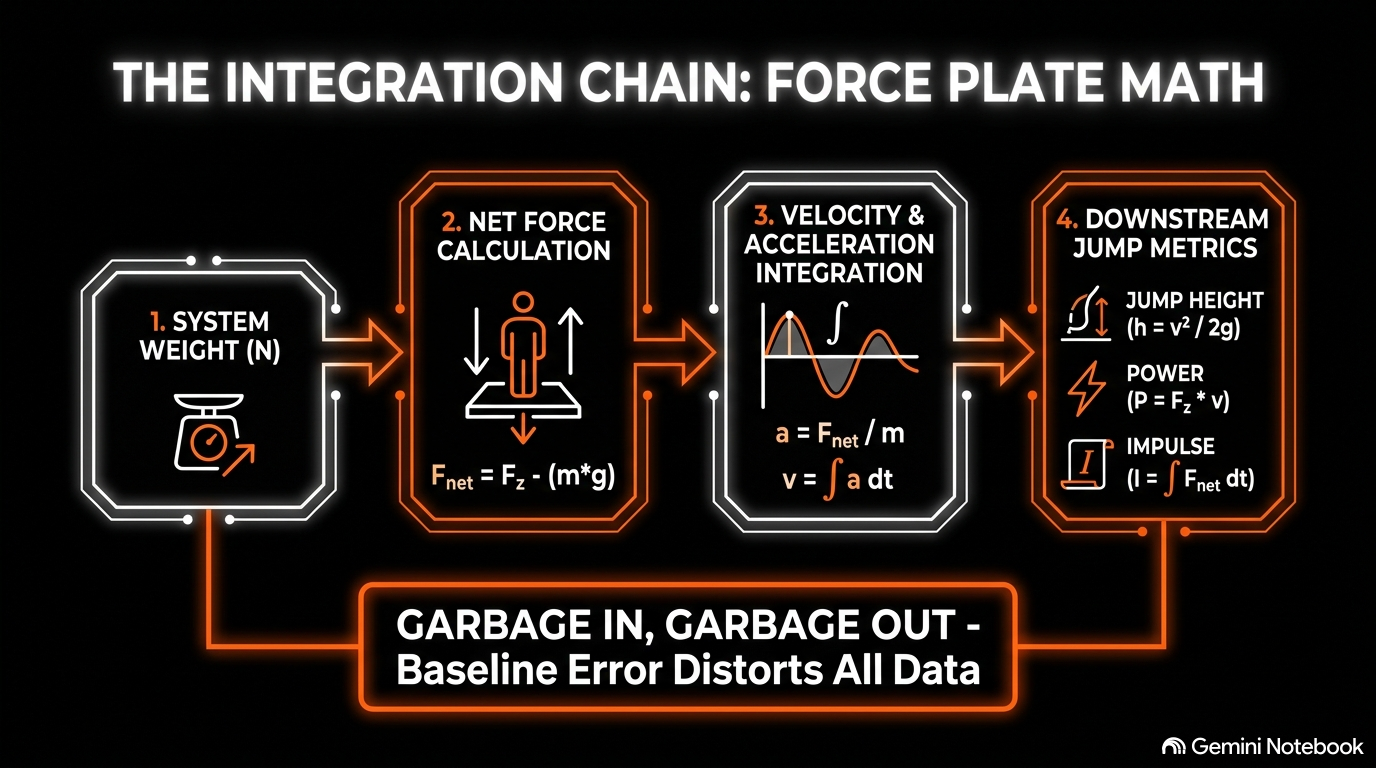
The biomechanical significance of the quiet phase stems directly from how force plates compute performance metrics. Force plates measure vertical ground reaction force over time, but they do not directly measure center-of-mass acceleration, velocity, or displacement. To calculate these metrics, the system determines the athlete's system weight—their body mass measured in Newtons—during the quiet phase.
This baseline mass is subtracted from the measured force to derive net force, which is mathematically integrated over time to yield acceleration, velocity, displacement, and net impulse. If an athlete fidgets, shifts weight, or drops into the jump prematurely during this quiet period, the calculated system weight becomes inaccurate. That initial calculation error propagates through every subsequent phase of the jump, corrupting unweighting impulse, braking force, propulsive power, and ultimately jump height.
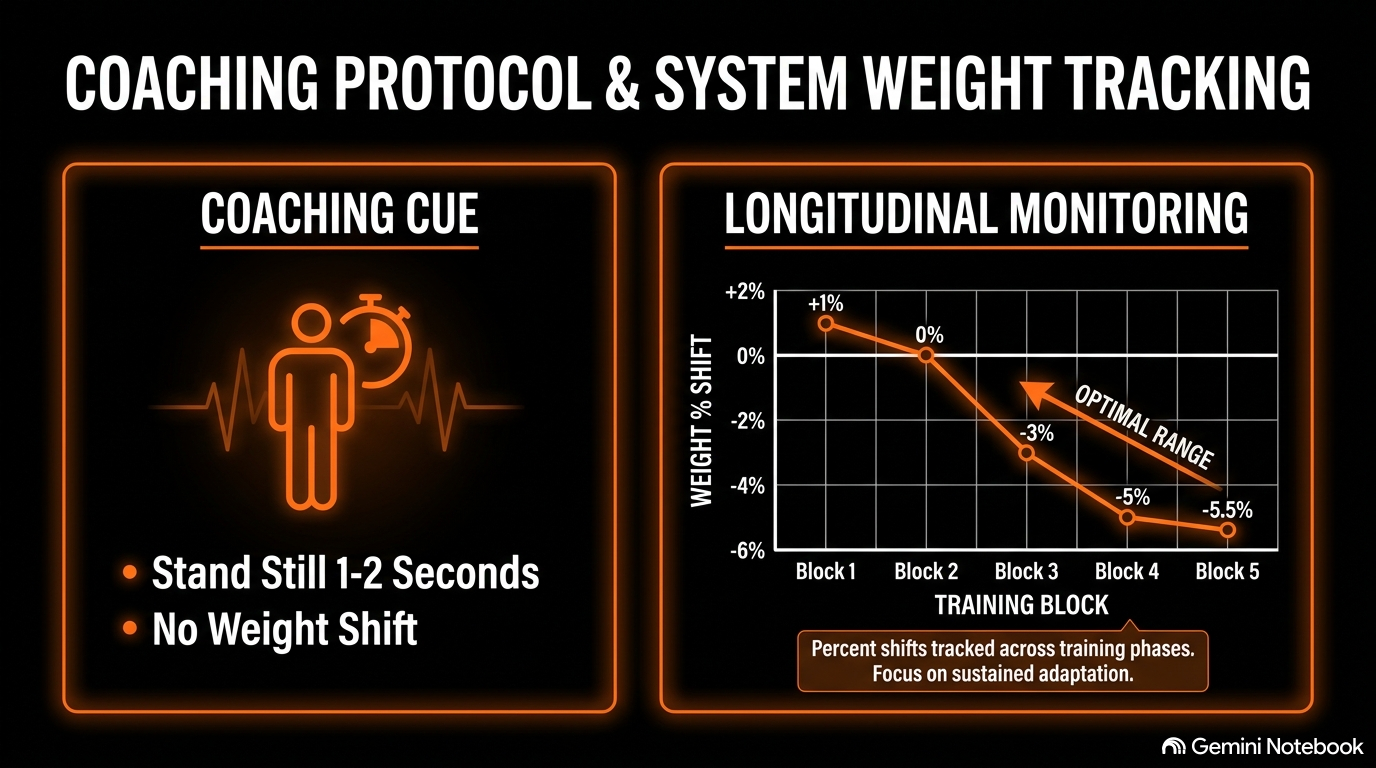
To protect data integrity, performance professionals must enforce a standardized testing protocol during the weighing period. The quiet phase requires the athlete to stand completely motionless for at least 1 full second prior to initiating downward movement.
In practice, allowing an athlete to step onto the force plates and immediately drop into a countermovement introduces motion noise into the system weight calculation. Coaches can eliminate this error source by delivering clear, direct cues such as "stand like a statue" or "hold completely still" for 1 to 2 seconds before giving the signal to jump. Enforcing this short motionless window ensures high test validity and reliable cross-session comparisons.
Beyond ensuring jump metric accuracy, the quiet phase offers an additional practical benefit for longitudinal athlete monitoring. Because system weight is automatically logged during every testing session, practitioners can passively track body weight trends over time without requiring a separate weigh-in process.
By analyzing percentage fluctuations in system weight relative to an athlete's historical baseline, coaches can spot subtle shifts in body mass. These weight variations can serve as early indicators of hydration changes, body composition adjustments, or unmanaged fatigue throughout a competitive season.
Ultimately, the quiet phase proves that the accuracy of explosive jump metrics depends entirely on the stability of the initial standing baseline. For strength and conditioning coaches, sports scientists, and athletic trainers, the key takeaways are straightforward:
By treating the quiet phase with the same rigor as explosive propulsion, performance professionals can ensure that their force plate testing delivers dependable, actionable insights.