
May 27, 2026

The Ultimate Playbook for Jump Diagnostics: Merging Depth, Stiffness, and Waveform Analysis
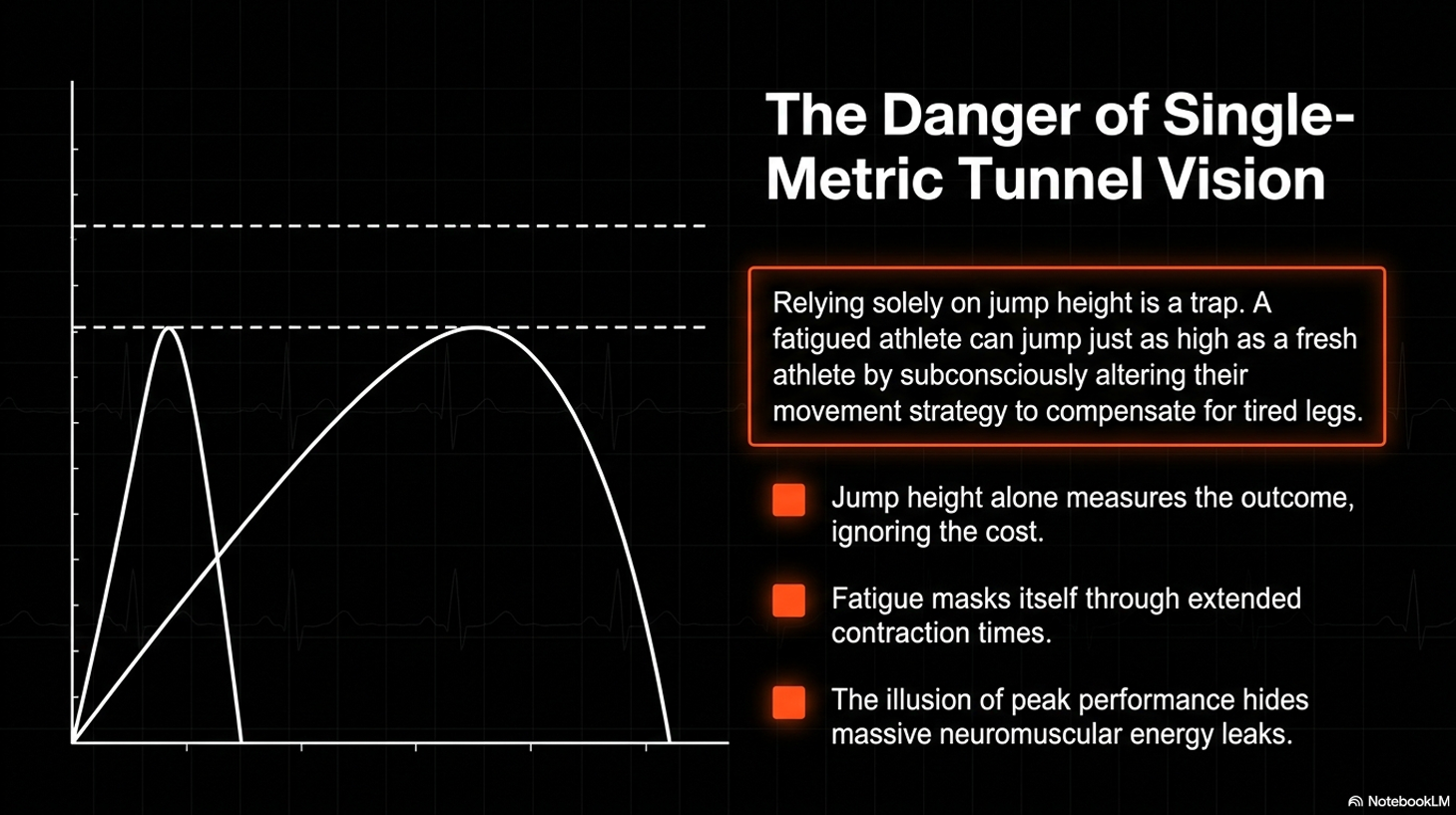
[Beefed-Up Introduction] For performance coaches, maximizing an athlete's explosive potential while mitigating their injury risk is the ultimate balancing act. Historically, the industry has relied heavily on "single-metric tunnel vision"—using metrics like jump height alone to gauge daily readiness. However, relying solely on jump height is a dangerous trap. Because it only measures the outcome while ignoring the physiological cost, it allows the illusion of peak performance to hide massive neuromuscular energy leaks. A fatigued athlete can often jump just as high as a fresh one by subconsciously altering their movement strategy to compensate for tired legs
This guide moves beyond the basics and takes you "under the hood" to decode the exact neuromuscular strategies your athletes use to produce force. By mastering the interplay between Countermovement Jump (CMJ) depth, active stiffness, and advanced waveform analysis, you will be equipped to catch hidden fatigue early, identify energy leaks, and make targeted, data-driven interventions before performance drops on the field. Ultimately, understanding this continuum reveals whether your athlete is operating as an efficient, tightly coiled spring or bleeding power like a leaky shock absorber
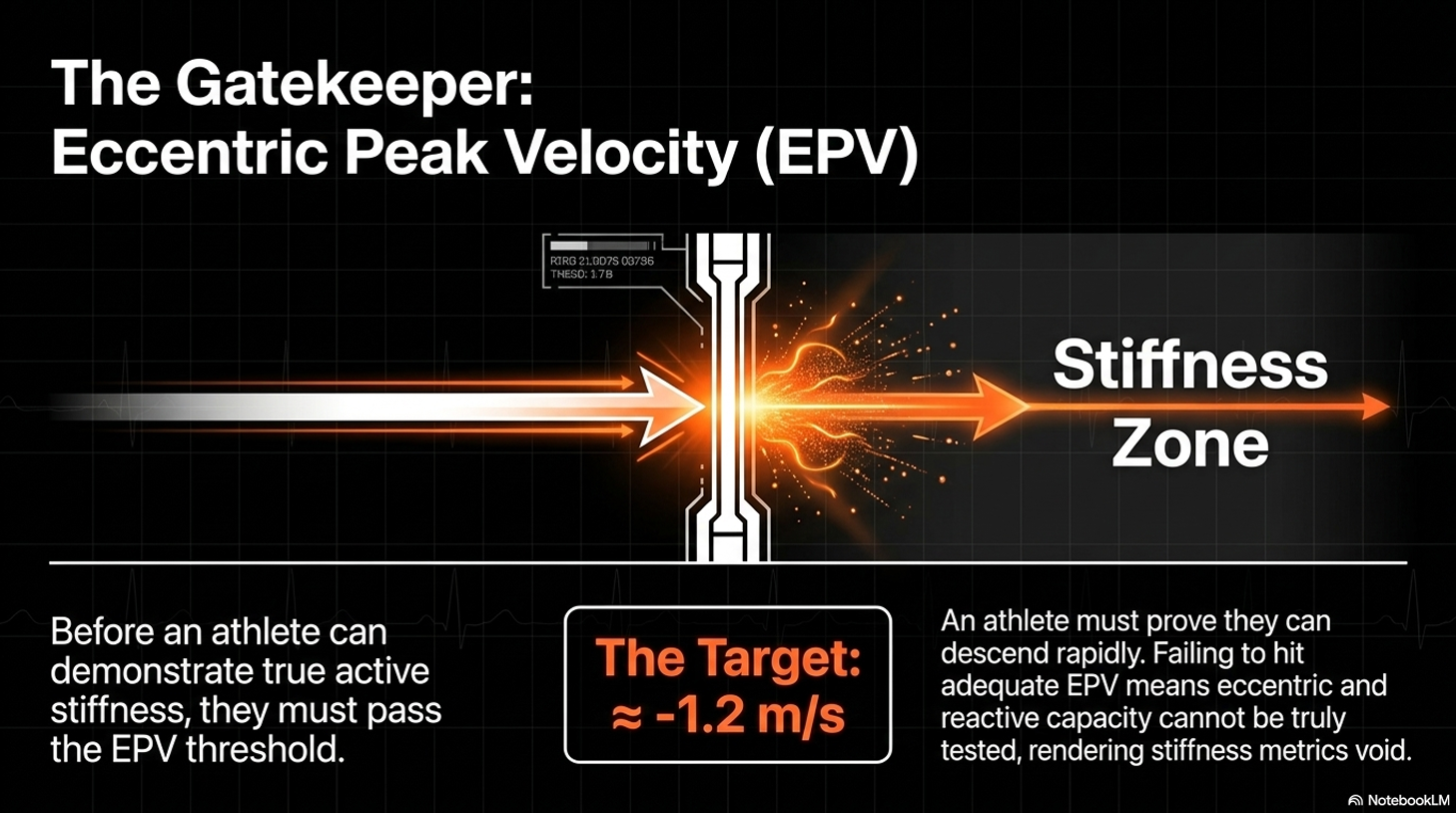
The Foundation: The Depth-Stiffness Continuum and the EPV Gatekeeper In elite sports, time is a luxury athletes rarely have. Optimal active stiffness acts like a tightly coiled spring that absorbs impact and instantly recycles elastic energy into an explosive upward movement with minimal downward displacement. However, before an athlete can even demonstrate true active stiffness, they must pass the "gatekeeper" metric: Eccentric Peak Velocity (EPV). An athlete must hit a target of approximately -1.2 m/s to prove they can descend rapidly. Failing to hit adequate EPV means eccentric and reactive capacity cannot be truly tested, rendering stiffness metrics void.
[Insert Slide 5: The Gatekeeper: Eccentric Peak Velocity (EPV) here]
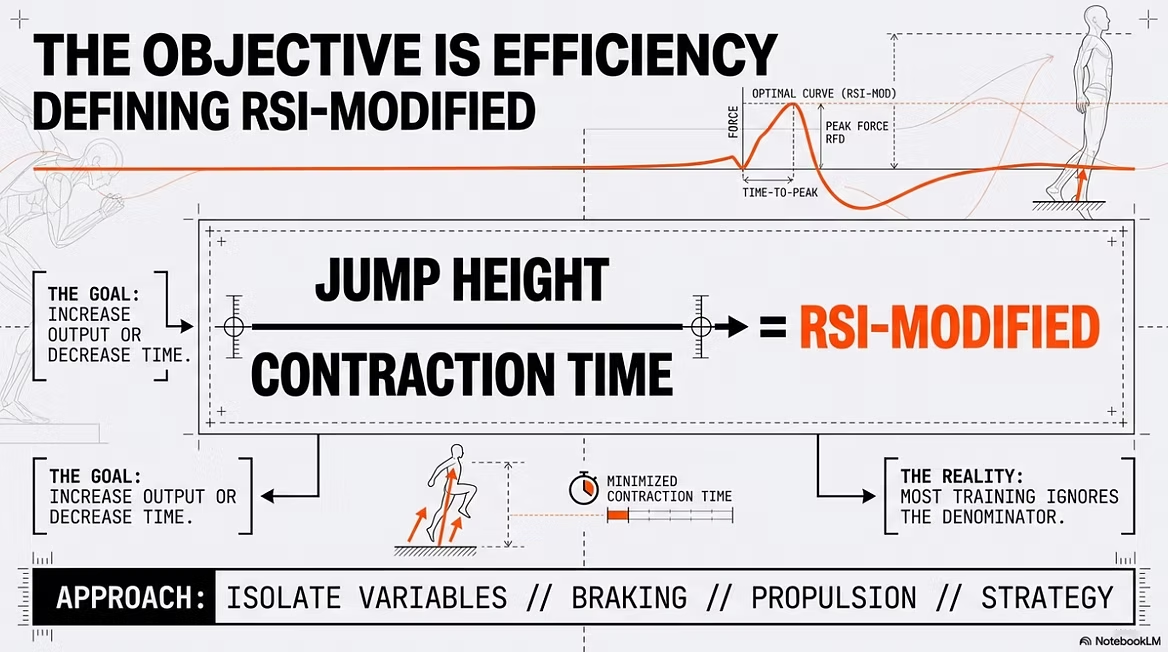
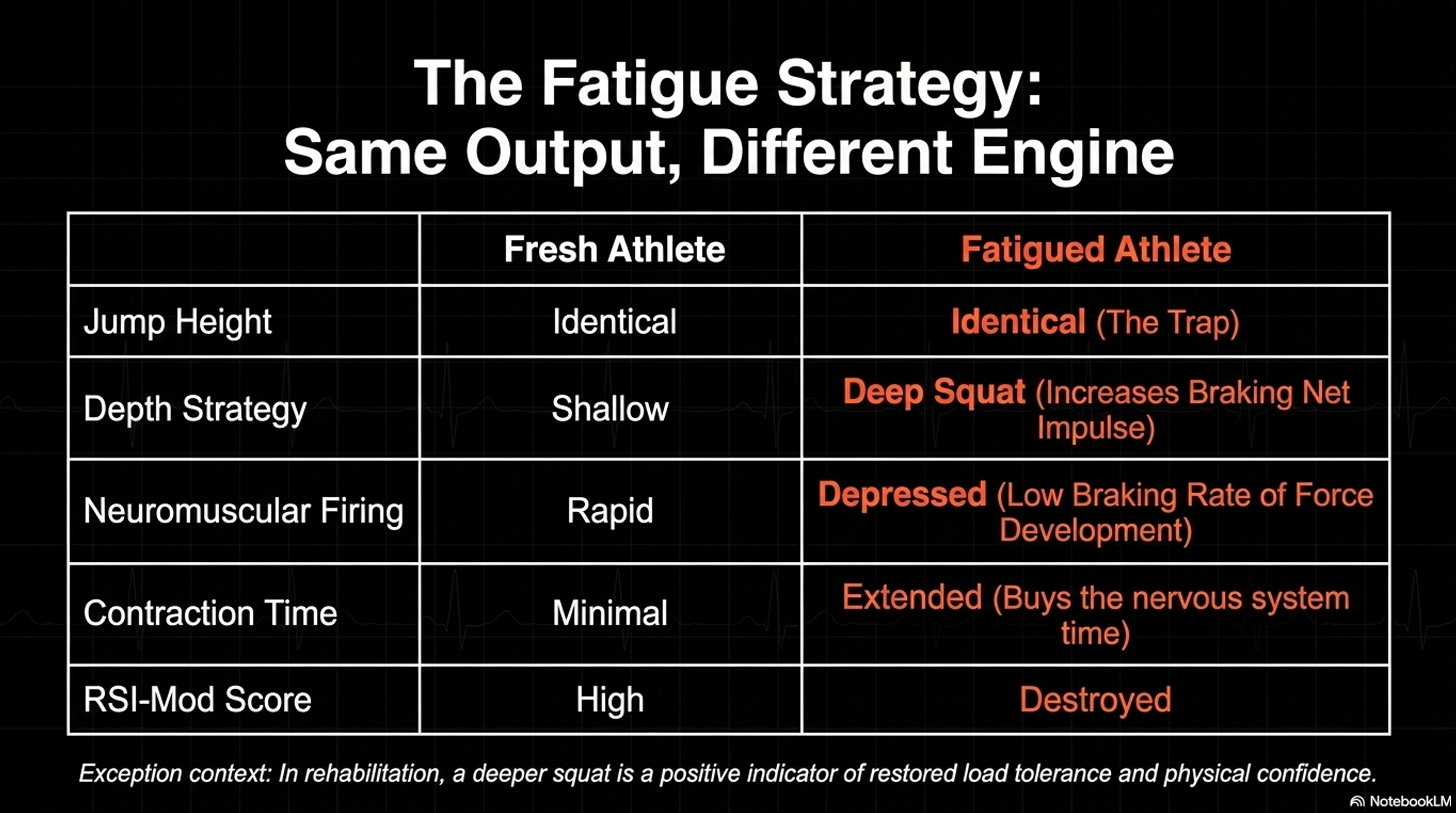
Decoding the "Fatigue Strategy" When optimal mechanics break down due to accumulated neuromuscular fatigue, an athlete's strategy completely changes. When tired, an athlete's motor-unit firing rate drops, which depresses their Braking Rate of Force Development (BRFd). Unable to generate force rapidly, the athlete compensates by increasing their Braking Net Impulse, intrinsically dragging them into a deeper, slower squat. This extends their contraction time, buying their tired nervous system enough time to hit their normal jump height. While the final outcome looks fine, this deeper "fatigue strategy" artificially inflates their ground contact time and destroys their RSI-Mod (Reactive Strength Index-modified) score.
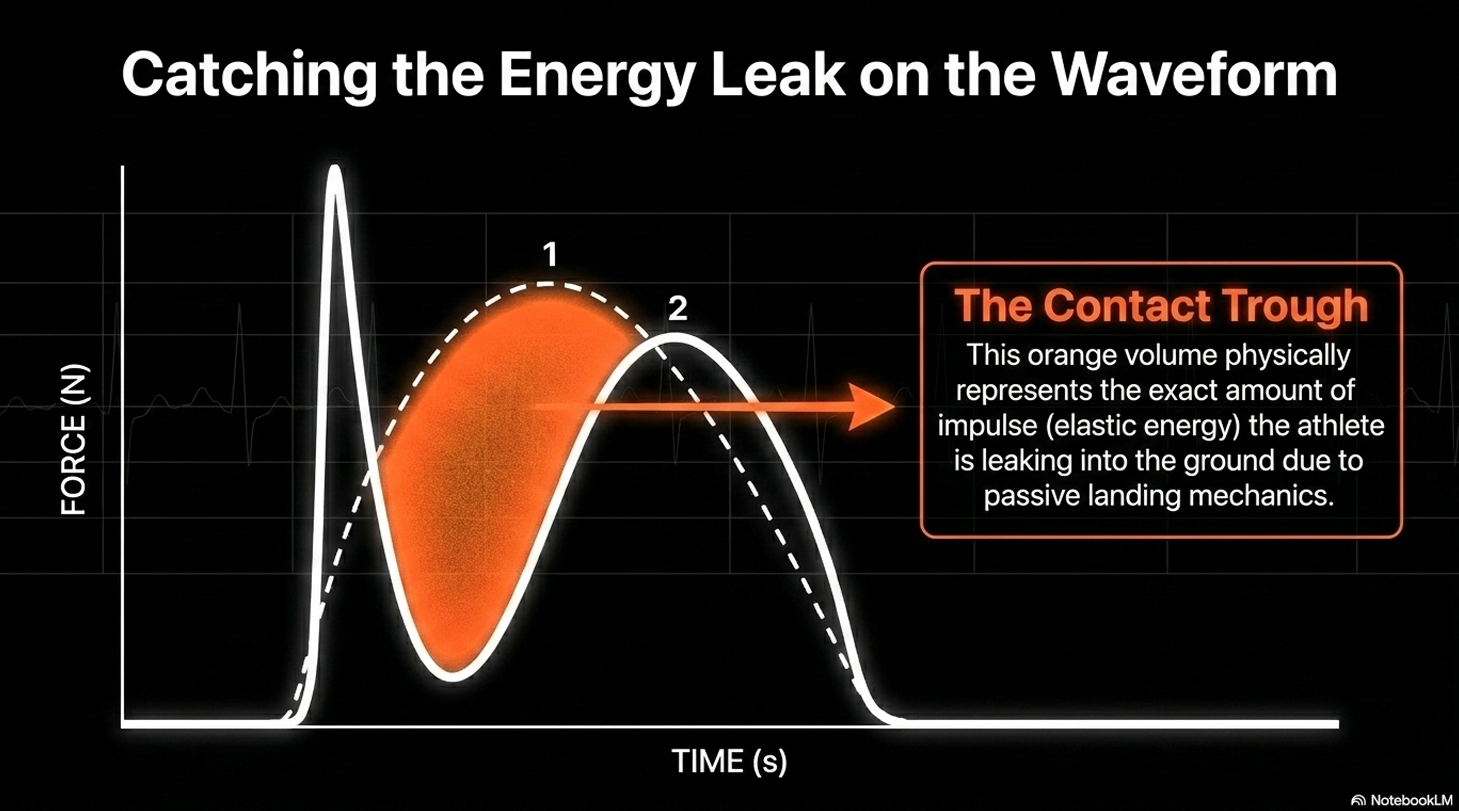
Catching the Energy Leaks on the Waveform As athletes spend more time braking and squatting deeper, they inevitably leak elastic energy. By analyzing the force-time curve, practitioners can catch these leaks:
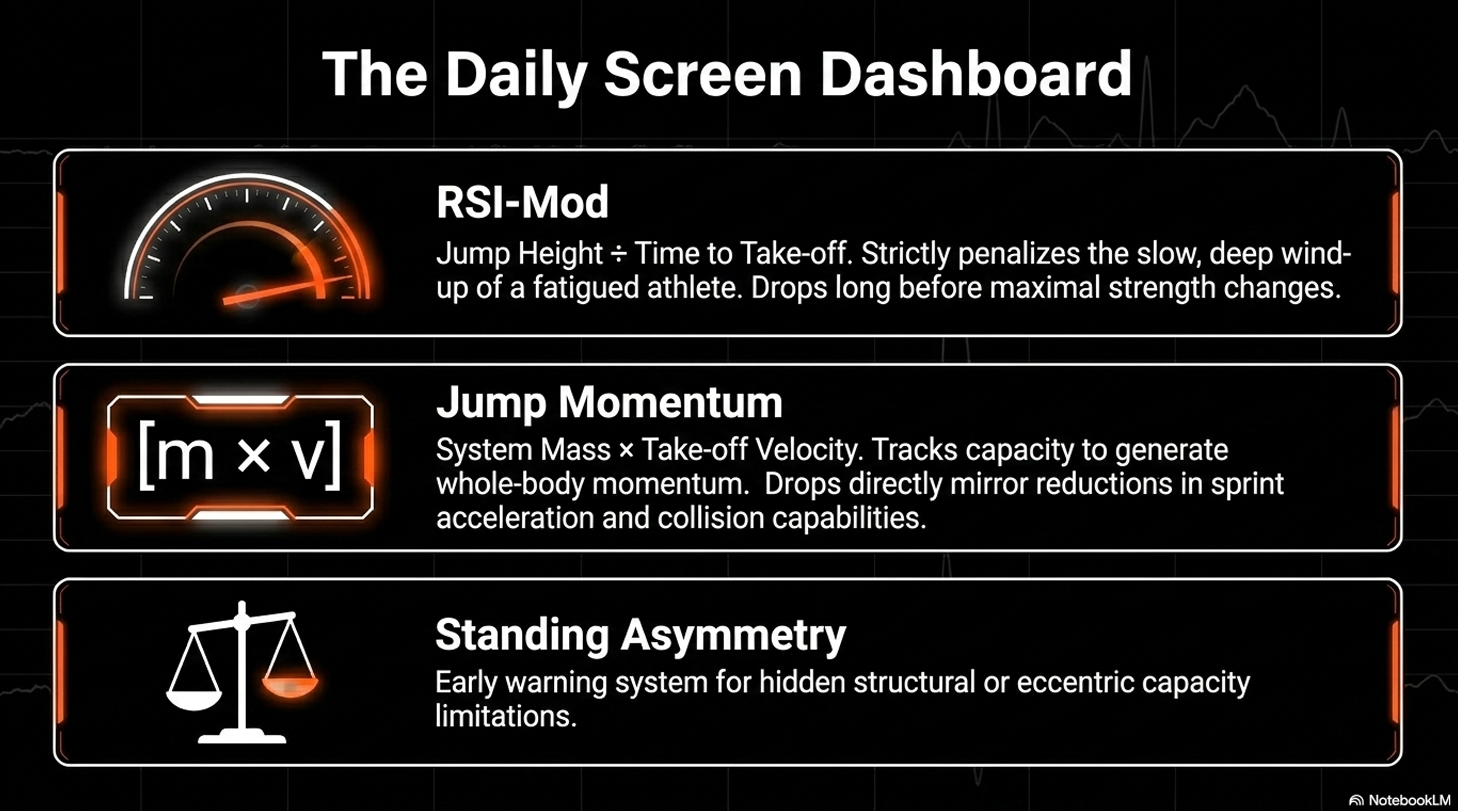
The Daily Screen: Turning Data into Action You cannot dissect every waveform every single morning. For a daily readiness screen, advanced practitioners must look at the unified picture using a few highly sensitive drivers:
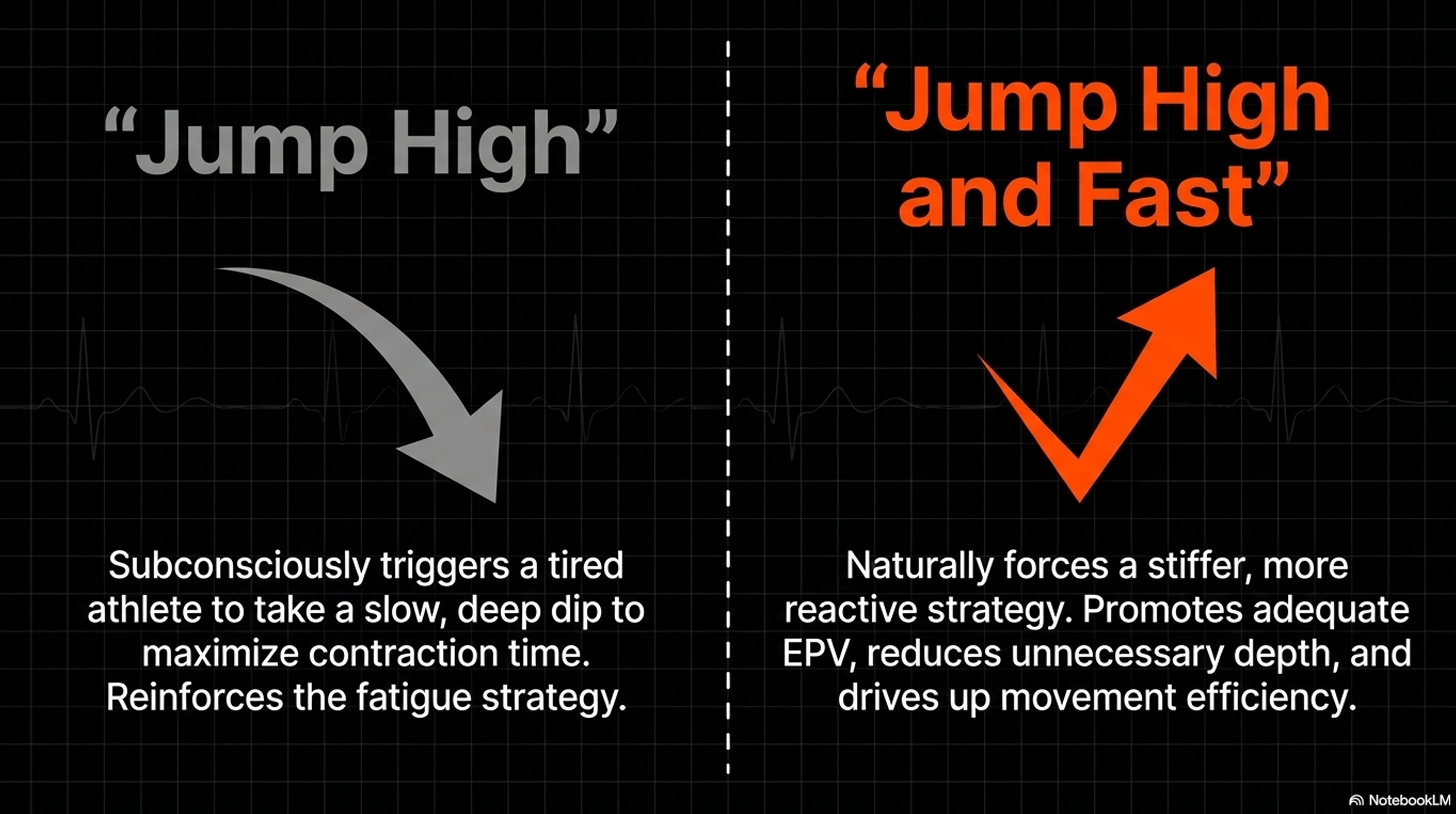
Correcting the Leaks with Cueing If your daily monitoring catches a drop in stiffness and RSI-Mod, or an increase in depth, the simplest fix is often verbal. If you simply cue "Jump high," you subconsciously trigger a tired athlete to take a slow, deep dip to maximize their contraction time, reinforcing the fatigue strategy. Changing your cue to "Jump high and fast" naturally forces a stiffer, more reactive strategy. This velocity-focused cue promotes adequate EPV, reduces unnecessary depth, and drives up movement efficiency.
Conclusion
Ielite sports, time is a luxury athletes rarely have, and your monitoring protocols must reflect that reality. By viewing the Depth-Stiffness continuum as a unified picture, performance coaches can confidently assess whether an athlete is acting as an efficient, tightly coiled spring or relying on a slow, deep "fatigue strategy" simply to survive an accumulated load. You do not need to suffer from "paralysis by analysis" to leverage force plate data effectively. By focusing on sensitive daily drivers and understanding the "why" behind the waveforms, you can seamlessly integrate kinetic insights into your busy workflow to keep your athletes explosive, reactive, and resilient all season long.
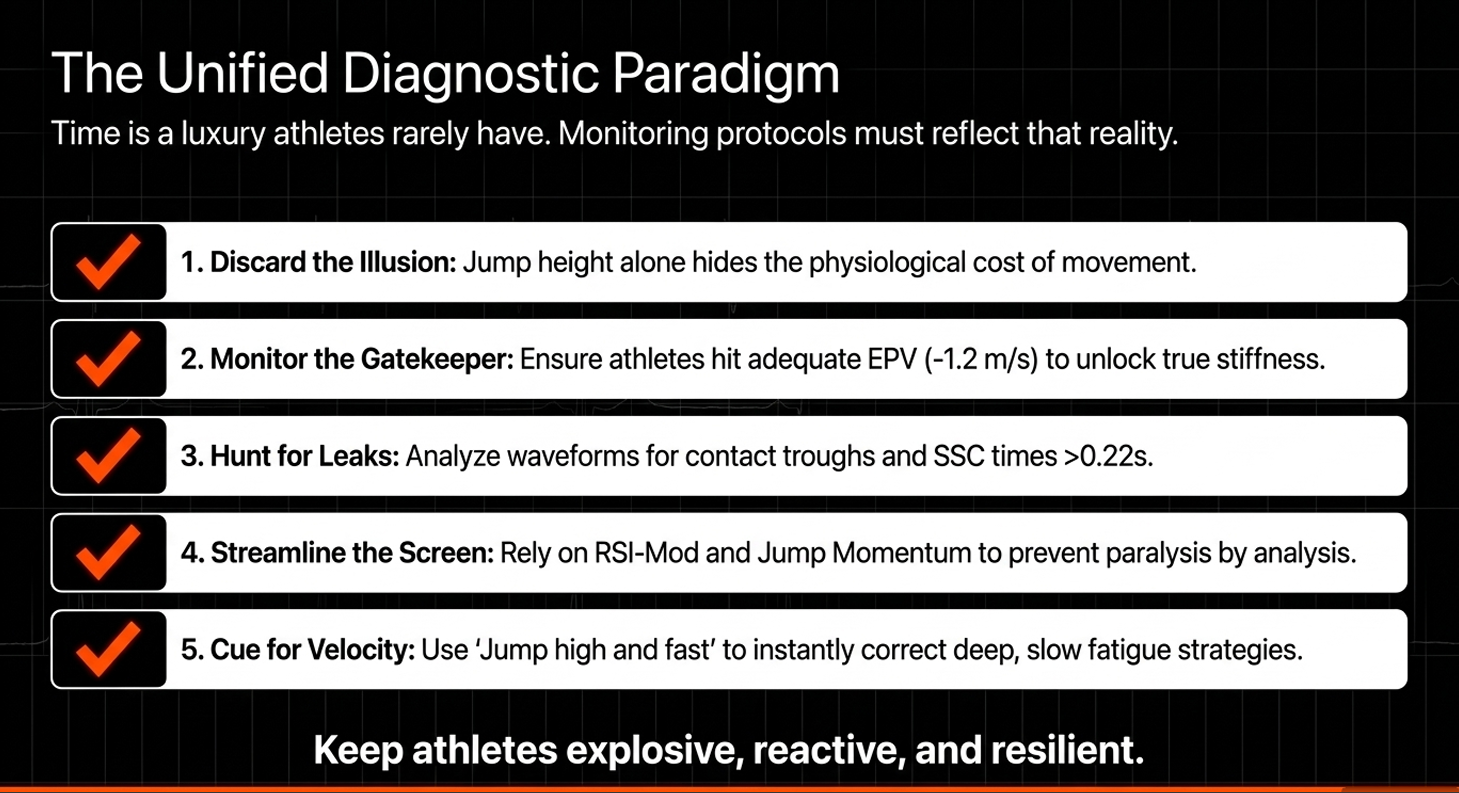
Key Takeaways for Your Daily Workflow: