

September 14, 2026

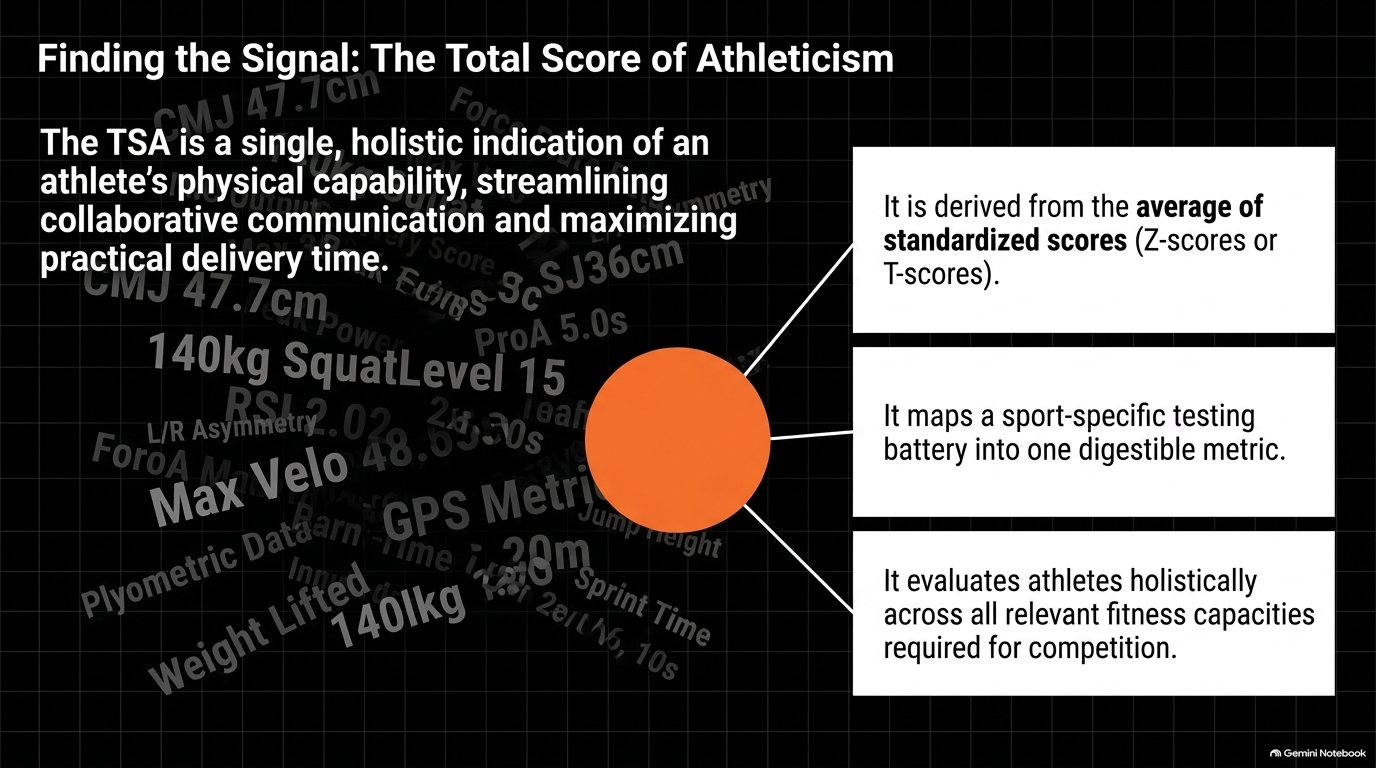
The Total Score of Athleticism (TSA) is a methodological framework designed to synthesize complex batteries of athletic assessments into a single, actionable indicator of functional readiness. In high-stakes performance environments, practitioners often struggle with "information overload"—possessing wealths of discrete data points (sprint velocities, jump heights, aerobic levels) that lack a unified perspective. By utilizing standardized statistical models (Z-scores and T-scores), the TSA framework strips away disparate units (seconds, kilograms) to reveal an athlete's standing relative to their specific peer group.
This document outlines the shift from viewing raw numbers in isolation to a holistic "bird’s-eye view" of athletic preparation. Key takeaways include the reframing of weaknesses as "windows of opportunity," the prioritization of local squad benchmarks over global standards, and the use of visual "Traffic Light" systems to bridge the communication gap between data scientists and coaching staff.
Traditional performance reviews are frequently hindered by fragmented data. Stakeholders—including head coaches, medical leads, and technical staff—are often presented with a "sea of spreadsheets" containing isolated metrics.
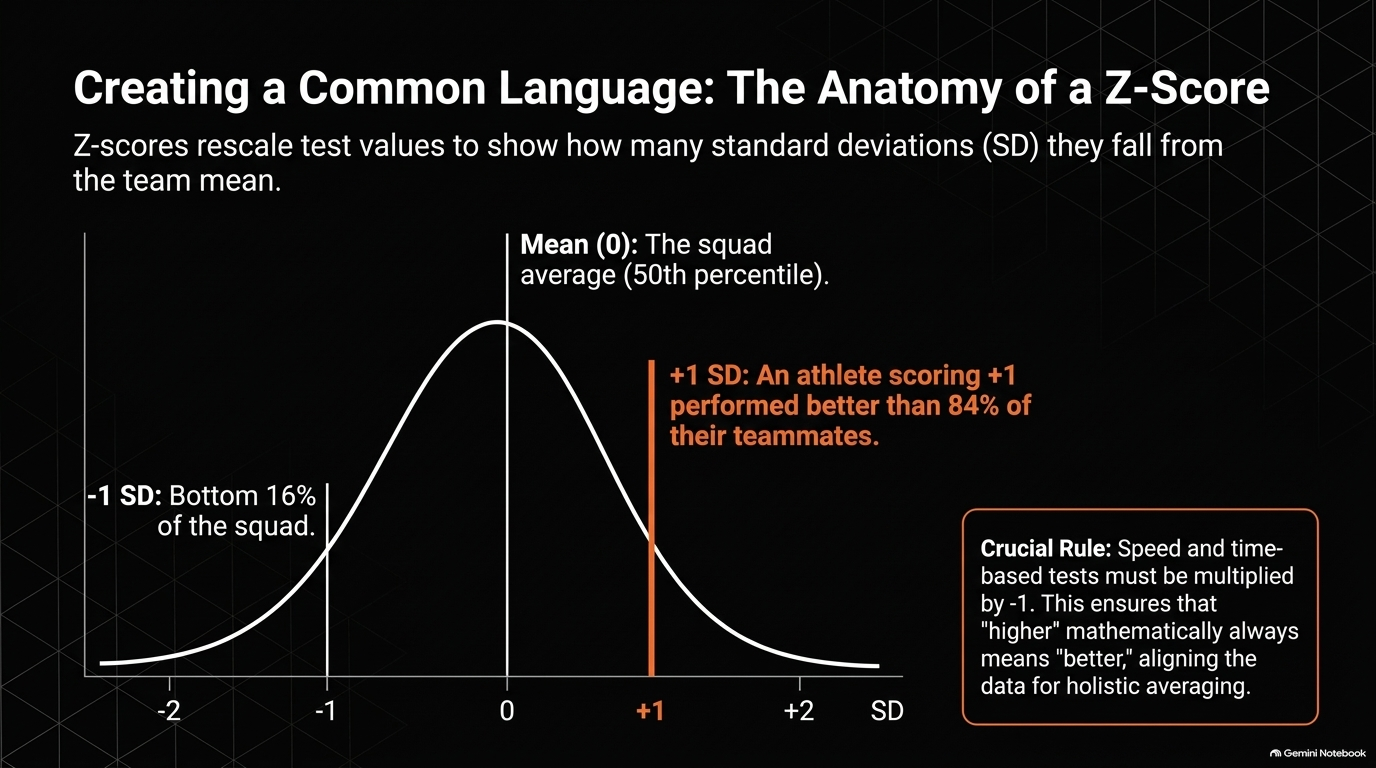
The TSA framework relies on converting raw performance data into unit-less, standardized values. This allows for the comparison of unrelated qualities, such as linear speed and absolute strength, on a shared scale.
The choice of model is determined by the cohort size and data distribution:
Standardized scores provide a clear indication of an athlete's percentile ranking within their squad:

Note: For speed-based tests where lower numbers are superior, scores are multiplied by -1 to ensure that values "above the line" always represent strengths.
The TSA is calculated by averaging standardized scores across a sport-specific testing battery. This approach prioritizes "well-roundedness" over dominance in a single physical silo.
The framework asserts that a squad’s own average is the only vital benchmark for performance standards.
The executive value of data is lost if it cannot be digested quickly. The TSA framework employs visual tools to facilitate immediate understanding for non-scientists.
To prevent "paralysis by analysis," athletes are categorized into three tiers:
While the TSA provides clarity, expert practitioners must recognize a fundamental statistical reality: in any standardized distribution, a significant portion of the squad will always fall below the mean.
The skill of the performance consultant lies in discerning whether a low score represents a genuine opportunity for improvement or is simply a byproduct of being in an "exceptionally elite group." The TSA serves as the compass for this discernment, ensuring that training hours are invested where the potential for growth is greatest, ultimately transforming the athlete from a specialist into a complete, functional competitor.

Article Reference
Turner, A. N., Jones, B., Stewart, P., Bishop, C., Parmar, N., Chavda, S., & Read, P. (n.d.). Total score of athleticism: Holistic athlete profiling to enhance decision-making. Strength and Conditioning Journal