BIOMECHANICAL AND NEUROMUSCULAR PERFORMANCE REQUIREMENTS OF HORIZONTAL DECELERATION: A REVIEW WITH IMPLICATIONS FOR RANDOM INTERMITTENT MULTI-DIRECTIONAL SPORTS [Article Review]
Whistle Performance
October 12, 2026
Stopping Power: The Missing Blueprint in Athletic Performance and Injury Prevention
Introduction: The Forgotten Half of High-Speed Motion
In multi-directional team sports—such as soccer, basketball, rugby, and field hockey—athletic success is frequently measured by how fast a player can sprint. Decades of sports science literature have dissected linear horizontal acceleration, producing extensive force-velocity profiling models and sprint acceleration coaching frameworks. However, acceleration represents only half of the locomotor equation during competition.
In their landmark review paper, Biomechanical and Neuromuscular Performance Requirements of Horizontal Deceleration: A Review with Implications for Random Intermittent Multi-Directional Sports, lead author Damian J. Harper and co-authors Alistair J. McBurnie, Thomas Dos’Santos, Ola Eriksrud, Martin Evans, Daniel D. Cohen, David Rhodes, Christopher Carling, and John Kiely shed light on the historically overlooked skill of horizontal deceleration.
Why the Study Was Done: The Rationale Behind the Review
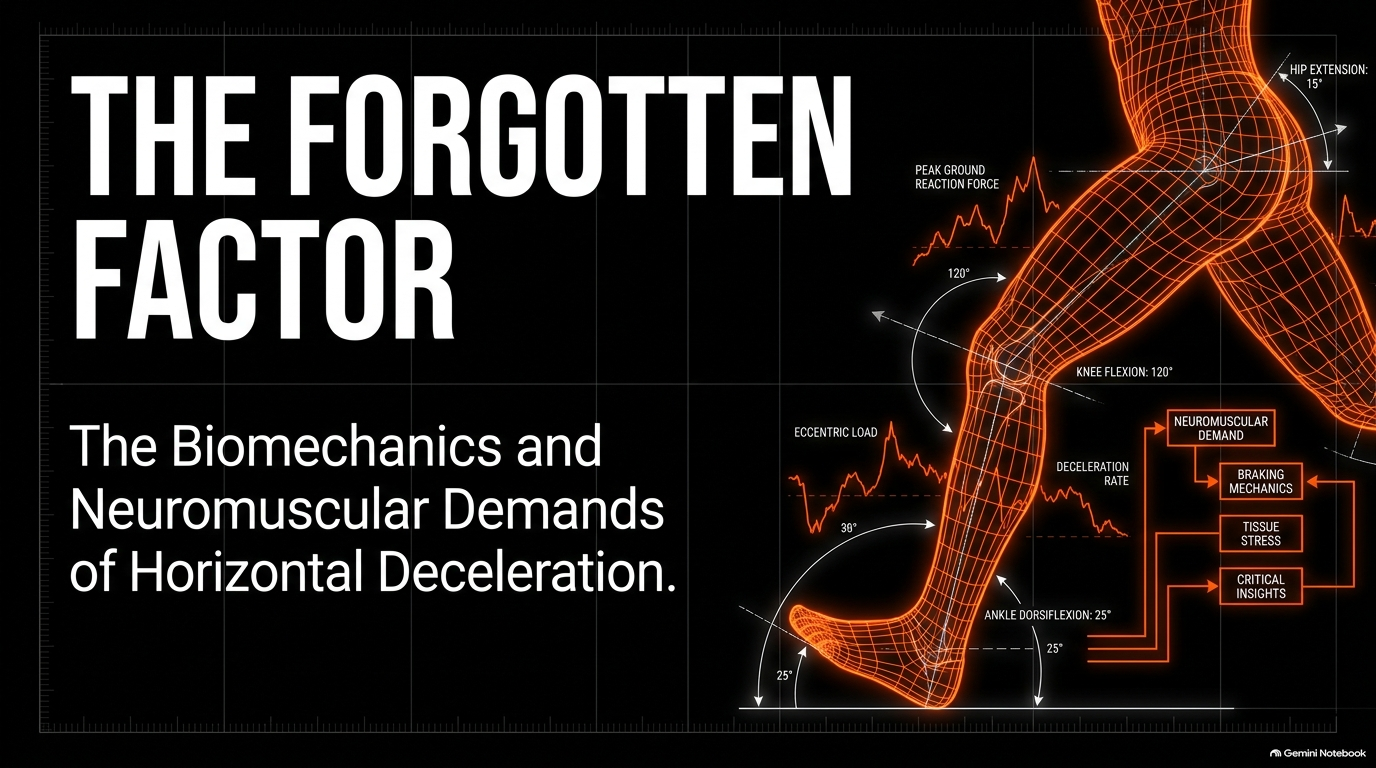
Despite being dubbed the "forgotten factor" in physical preparation, rapid horizontal deceleration is an irreplaceable requirement in modern sport. Modern game tactics—such as high-intensity defensive pressing, rapid counter-attacking, and sharp changes of direction (COD)—demand that athletes decelerate swiftly to close down space or evade defenders.
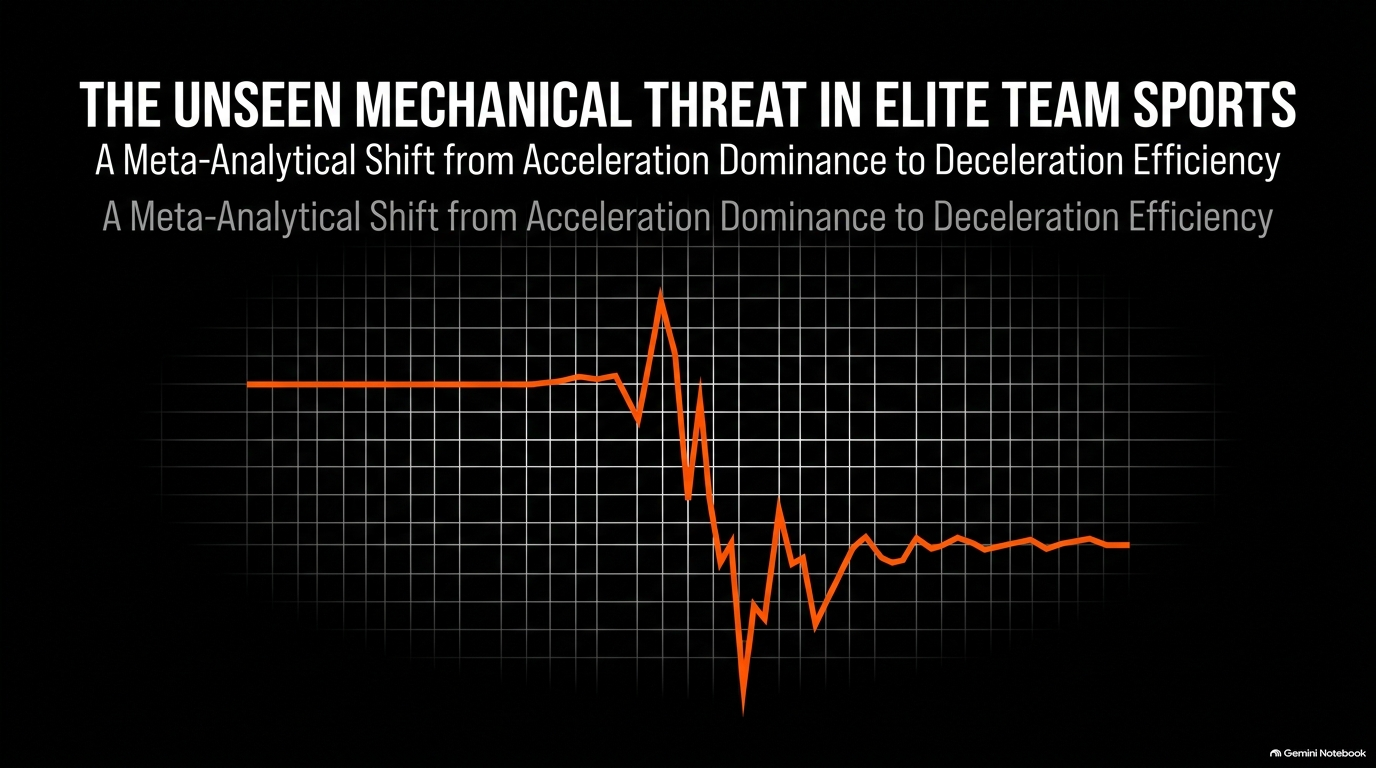
GPS match-tracking data reveals a stark reality: athletes perform high-intensity decelerations far more frequently than equivalently intense accelerations during competition. Yet, despite this high match exposure, physical preparation programs have disproportionately emphasized acceleration and top-speed sprinting while treating deceleration as an assumed byproduct.
Because stopping rapidly relies heavily on high-force eccentric muscle contractions, it subjects the musculoskeletal system to immense mechanical loading, muscle damage, and joint stress. Rapid braking actions are among the most frequent inciting events for non-contact anterior cruciate ligament (ACL) tears and chronic strain injuries. The review by Harper and colleagues was conducted to synthesize the available biomechanical and neuromuscular evidence, define what underpins elite braking ability, and provide strength and conditioning professionals with an evidence-based roadmap for training and injury risk mitigation.
The Results: Biomechanical & Neuromuscular Findings
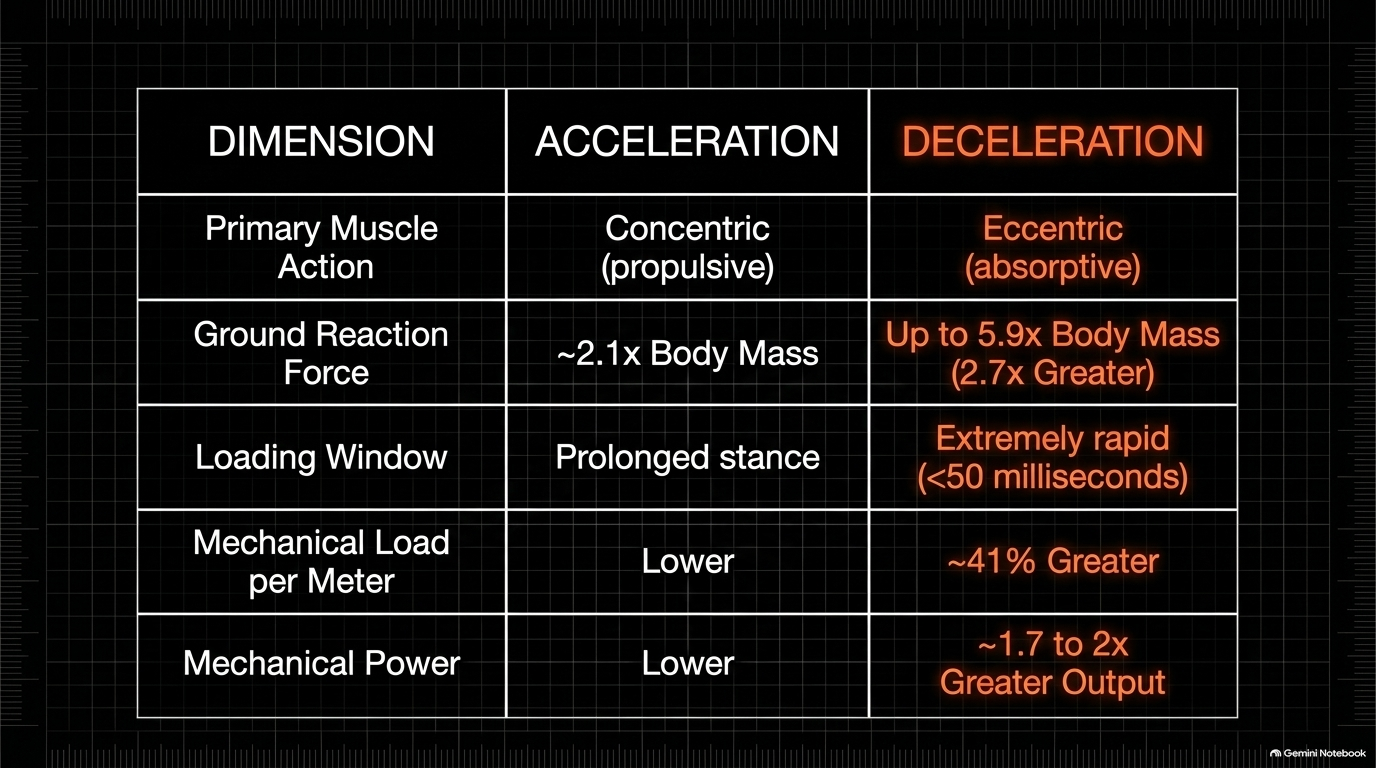
Unmatched Force Exposure: Total ground reaction force (GRF) exposure during the initial braking steps of a maximal horizontal deceleration is up to 2.7 times greater in magnitude than during the initial steps of a maximal acceleration.
Body Weight Multiples: For a 75 kg athlete, impact forces reach approximately 5.9 times body mass (58 N/kg) during early braking contact, compared to 2.2 times body mass (21 N/kg) during initial acceleration.
Loading Rates: Deceleration produces a distinct "tall-thin" impulse profile, with peak impact forces and extreme loading rates occurring within the first 10–40% of stance (< 50 ms) upon ground contact.
Mechanical Cumulative Load: High-intensity decelerations impose ~41% greater mechanical load per meter than equivalently intense accelerations and ~70% greater load per meter than high-speed running.
2. Match Demands & Frequency
Soccer: Professional players perform 80–104% more high-intensity decelerations (51–65 per match) than accelerations (27–35 per match).
Court Sports: Basketball players perform 3.2–4.5 high-intensity decelerations per minute, compared to only 0.8–1.5 accelerations per minute.
Magnitude Differences: Soccer players reach higher peak deceleration rates (−5.7 to −6.3 m/s²) than peak acceleration rates (4.4 to 4.7 m/s²) during competitive matches.
3. External Mechanical Power & Phase Differences
Peak Power: External mechanical power during maximal deceleration is ~1.7 to 2.0 times greater than during maximal acceleration (~ −44 W/kg vs. 26 W/kg).
Phase Split: The highest average horizontal braking power occurs early in the deceleration phase (when center of mass velocity is highest). Conversely, the highest average horizontal braking force occurs late in the deceleration phase (when velocity is reduced and force application time is longer).
Preparatory Steps Rule Performance: Deceleration is a multi-step task. In a 180° COD turn, the horizontal-to-vertical GRF ratio generated during the ante-penultimate foot contact (APFC)—two steps prior to the turn—explains 55–61% of total COD completion time.
Joint Protection: Effective pre-braking in preparatory steps diffuses momentum early, reducing peak knee abduction moments and joint loading during the final turning step, directly lowering ACL injury risk.
5. Neuromuscular & Muscle Activation Profiles
Quadriceps Dominance: The vasti muscles contribute ~76% and the rectus femoris ~33% to decelerating the center of mass (COM). Quadriceps activation during braking can exceed 150% of maximal voluntary isometric contraction (MVC) due to extreme eccentric loading.
Gravity Counteraction & Ankle Stiffening: The soleus (~54%) and vasti (~44%) counteract gravity. The soleus acts to "lock the ankle," preventing forward sway and exerting a posterior shear force that counteracts anterior tibial translation.
COM Control: The hamstrings and tibialis anterior pull the COM downward to assist precise anterior foot placement and maintain the COM behind the lead braking foot.
6. Injury Risk & Asymmetry
Primary Driver of Tissue Damage: Repeated high-intensity braking steps (< −3 m/s²) cause exercise-induced muscle damage and neuromuscular fatigue.
Asymmetrical Fatigue: Preferential reliance on a preferred limb when braking exposes that leg to excessive mechanical stress, accelerating structural fatigue and raising the likelihood of overuse tendon injuries or non-contact ACL tears.
Conclusion & Key Takeaways for Sport Performance Coaches
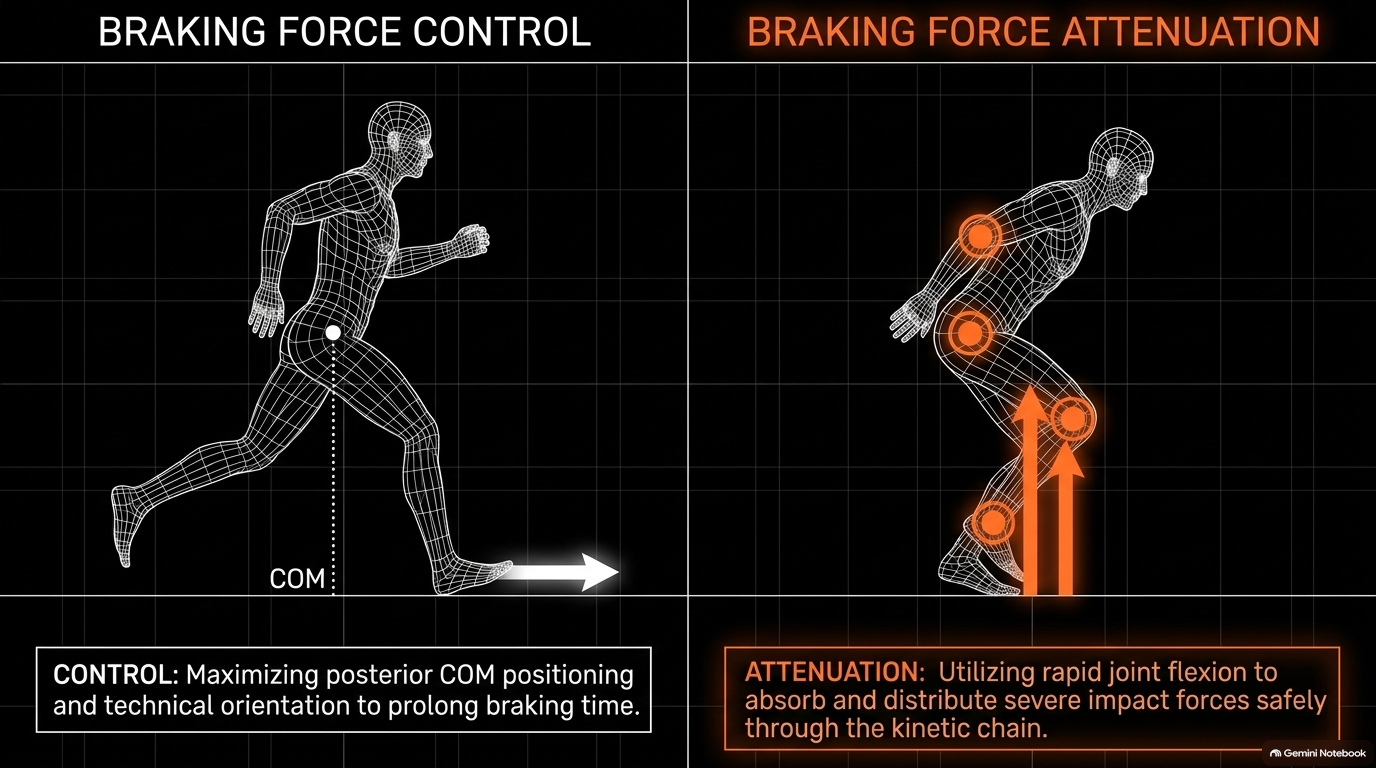
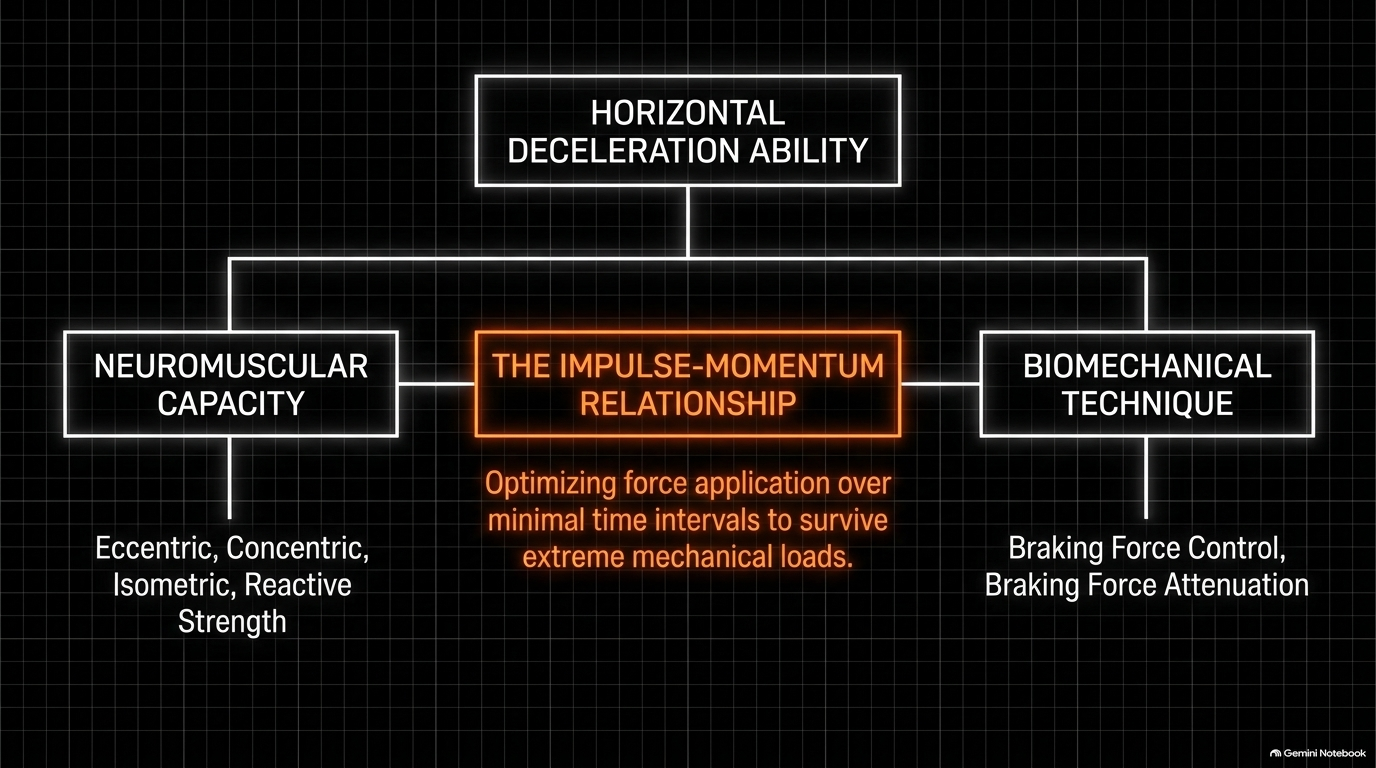
Horizontal deceleration is not merely the passive act of slowing down; it is an active, highly coordinated athletic skill requiring both braking force control (proficiently reducing whole-body momentum) and braking force attenuation (safely absorbing and distributing ground impact forces across the lower-limb kinetic chain).
To optimize field performance and safeguard athletes against fatigue and severe joint trauma, sport performance professionals should implement the following practical guidelines into their preparation systems:
1. Program Deceleration as a Dedicated Physical Quality
Do not assume linear sprint acceleration work automatically develops stopping capacity.
Integrate explicit horizontal braking sessions to expose athletes to high-magnitude eccentric loading, allowing the muscle-tendon architecture to adapt to high loading rates.
2. Coach the Multi-Step Braking Strategy
Focus technical cues on the ante-penultimate (APFC) and penultimate (PFC) contact steps prior to a turn or stop, rather than placing all emphasis on the final plant foot.
Teaching athletes to distribute braking over 3 to 5 preparatory steps reduces peak impact forces on individual joints and protects the ACL during cutting maneuvers.
3. Re-Engineer Technical Posture & Kinematics
Lower the COM ("Triple Flexion"): Cue dynamic hip, knee, and ankle dorsiflexion upon braking contact to lower the COM and maintain it behind the lead foot.
Posterior Trunk Lean: A backward trunk inclination combined with anterior foot placement directs the GRF vector horizontally, maximizing horizontal braking impulse.
Ankle Stiffening: Train ankle plantarflexor rate of force development (RFD) to ensure the soleus can "lock the ankle," controlling forward body sway and reducing anterior tibial shear.
4. Target Specific Neuromuscular Qualities
Maximal Eccentric Quadriceps Strength: Implement slow-to-moderate velocity eccentric knee extension loading (e.g., flywheel squats, heavy eccentric squats) to build the load-bearing capacity required to absorb forces exceeding 150% MVC.
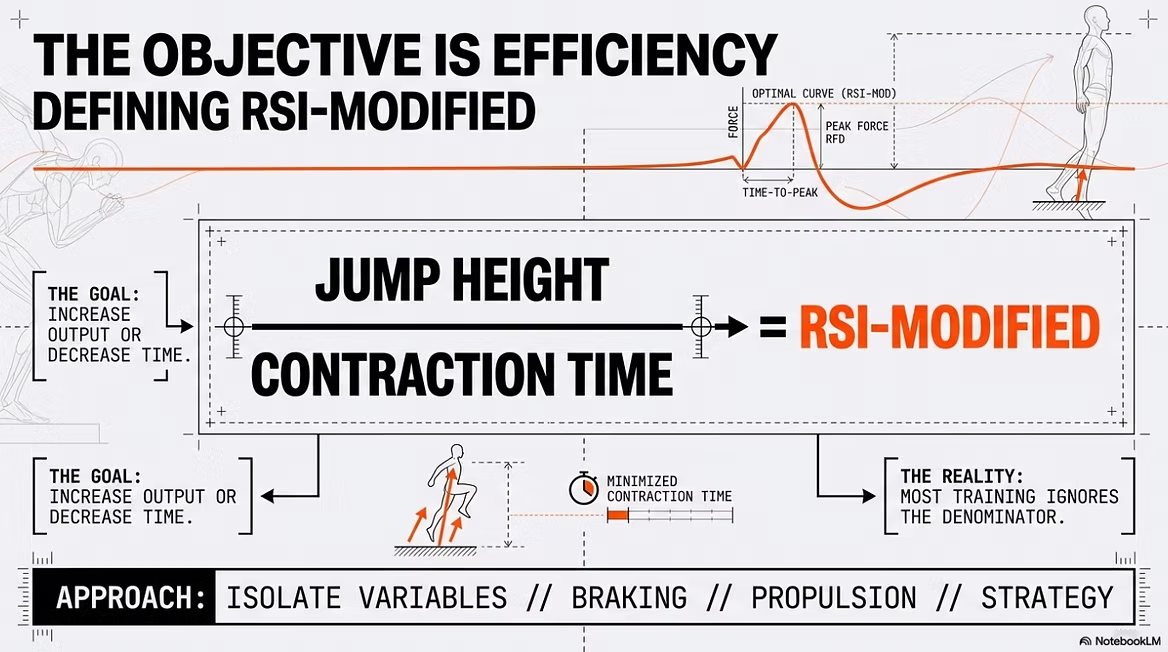
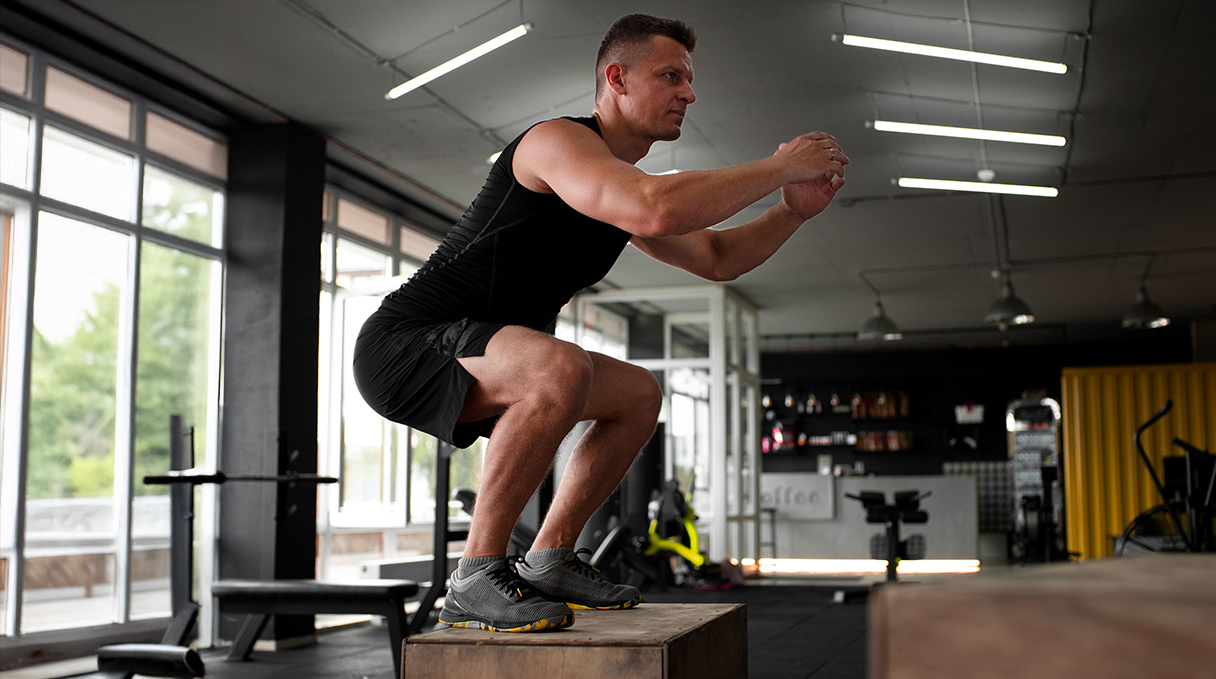
Reactive Strength & Pre-Activation: Utilize Drop Jumps (20–40 cm) to build high Reactive Strength Index (DJ-RSI) and explosive pre-contact muscle stiffness, enabling rapid impulse generation within the first 50 ms of stance.
Fast-Velocity Concentric Power: Maintain high-velocity concentric quadriceps and hamstring strength (180–240°/s) to ensure rapid limb switching and dynamic joint stabilization.
Assess braking mechanics bilaterally using multi-directional deceleration tests or inertial wearable sensors.
Train athletes to comfortably initiate, attenuate, and terminate high-velocity decelerations using both the dominant and non-dominant limbs to prevent limb-specific mechanical fatigue.
6. Adopt a "Mixed-Method" Training Framework
Combine traditional strength modalities (heavy eccentric squatting, Nordic hamstrings, flywheel resistance) with global multi-directional coordination drills (velocity-based deceleration tasks, reactive agility drills, and field-based sprint-to-stop progressions).
Article Reference:
Harper, D. J., McBurnie, A. J., Dos’Santos, T., Eriksrud, O., Evans, M., Cohen, D. D., Rhodes, D., Carling, C., & Kiely, J. (2022). Biomechanical and neuromuscular performance requirements of horizontal deceleration: A review with implications for random intermittent multi-directional sports. Sports Medicine, 52(10), 2321–2354.
what to read next
FATIGUE OR STRATEGY? USING RSI-MOD TO PINPOINT PERFORMANCE DECREMENTS
In high-performance environments, Jump Height has historically been the "king" metric. However, Jump Height is an outcome measure, it tells you what happened, but not how it happened...
HIGH-INTENSITY ACCELERATION AND DECELERATION DEMANDS IN ELITE TEAM SPORTS COMPETITIVE MATCH PLAY: A SYSTEMATIC REVIEW AND META-ANALYSIS OF OBSERVATIONAL STUDIES
Across nearly all elite team sports, athletes perform a significantly higher frequency of high-intensity decelerations than accelerations, with soccer showing the greatest excess of braking demands. American football is the primary exception, where players execute more accelerations overall, although specific roles like offensive linemen still face heavy deceleration loads. Both acceleration and deceleration outputs drop from the first to the second half due to accumulated neuromuscular fatigue. Because intense decelerations impose severe mechanical stress and soft-tissue damage, training must prioritize targeted eccentric strength conditioning to build tissue resilience and protect players from injury.
THE EFFECT OF ACUTE FATIGUE ON COUNTERMOVEMENT JUMP PERFORMANCE IN RUGBY UNION PLAYERS
Introduction: Why This Research Matters In the high-stakes world of professional sports, specifically Rugby Union, managing the delicate balance between training load and...