
August 17, 2026
The 10-Kilogram Penalty: How Tactical Gear Rewires Movement Strategy and Explosive Power
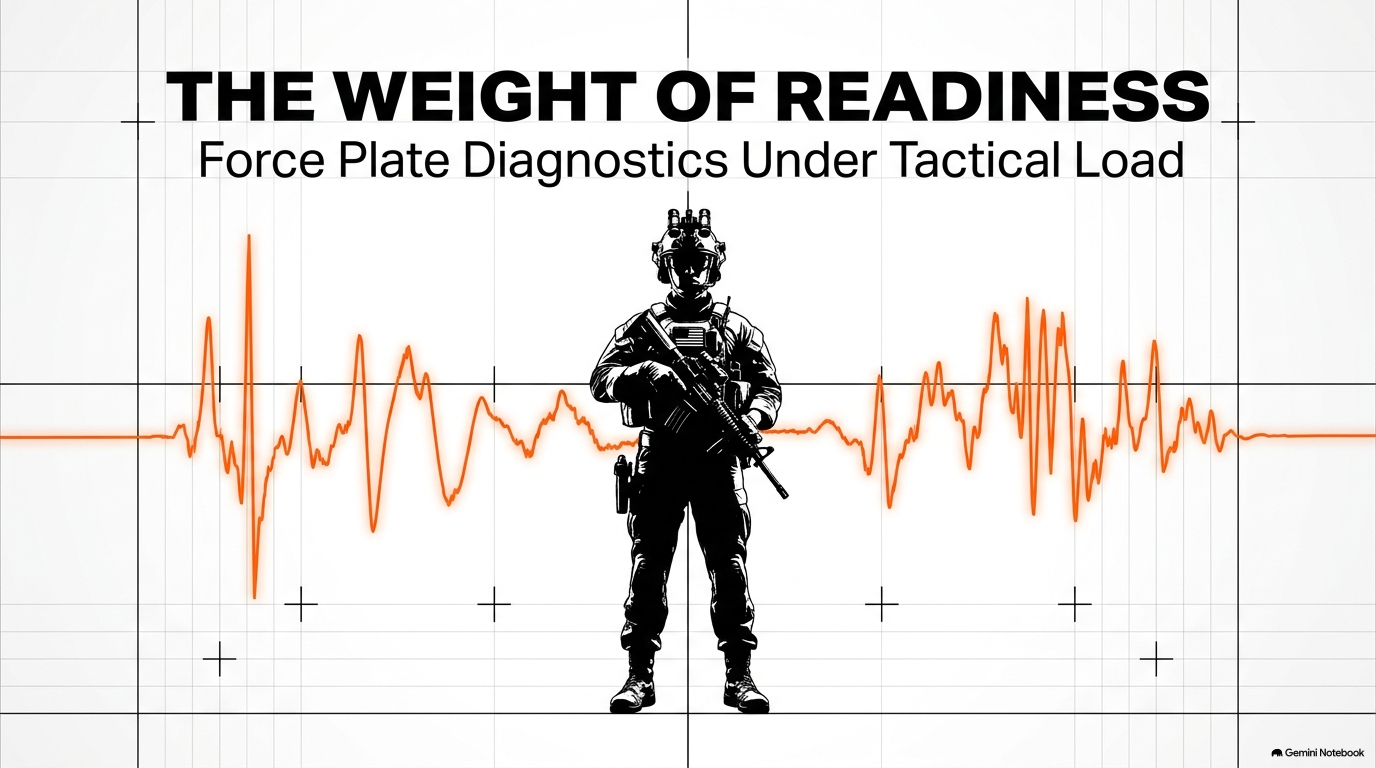
Modern soldiers do not simply carry weight; they wear a biomechanical constraint that functions as a second skin. Essential tactical gear—ballistic vests, helmets, and weaponry—standardizes a burden that frequently exceeds 10.6 kg. For the tactical athlete, this isn't merely an aerobic challenge; it is a fundamental shift in the physics of explosive movement.
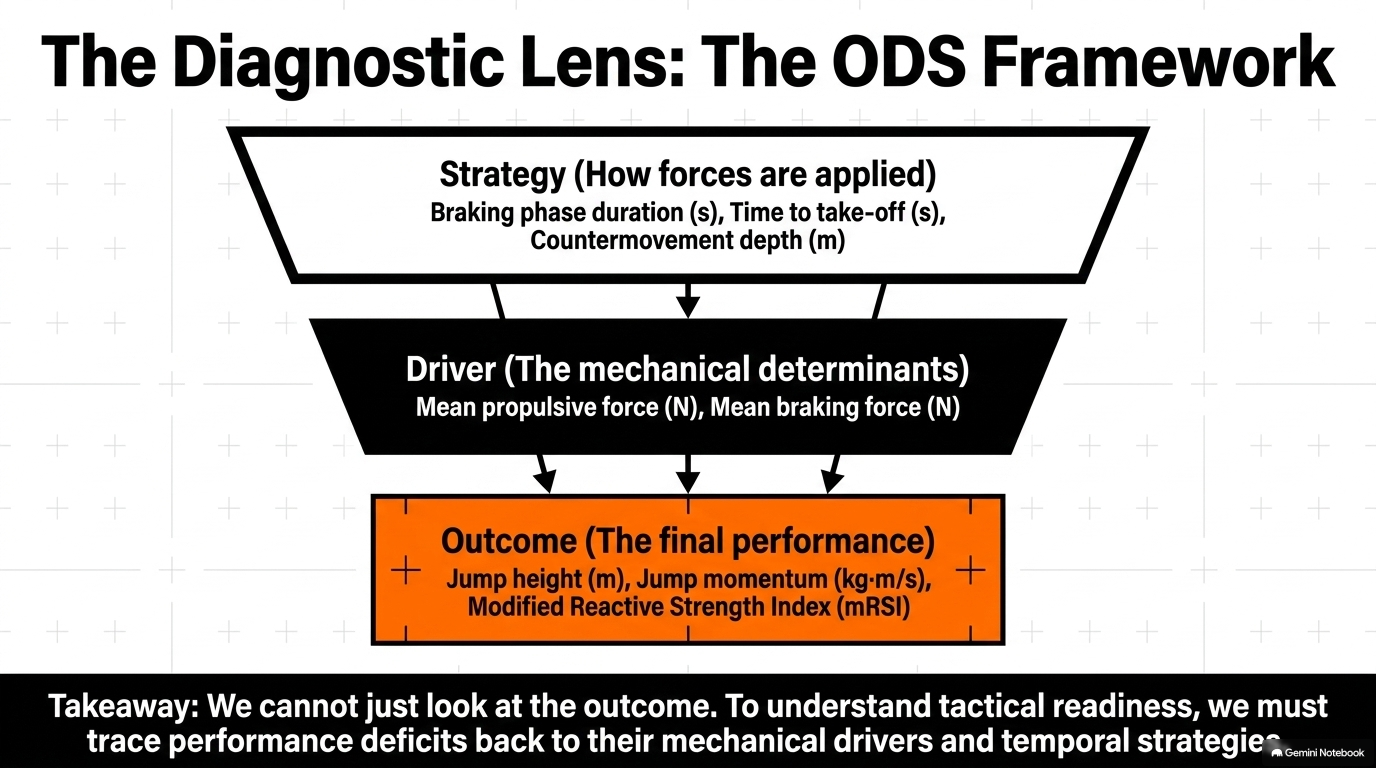
As a biomechanist, I look at this through the Outcome-Driver-Strategy (ODS) framework. We don't just care about the "Outcome" (how high you jumped); we care about the mechanical "Drivers" (the forces produced) and the "Strategy" (the temporal organization of the movement). Recent force-plate research involving Spanish Army personnel has revealed that tactical equipment doesn’t just make a soldier slower—it forces the body to adopt a completely different "force-oriented" movement solution. Understanding these shifts is the difference between a soldier who is simply "fit" and one who is truly operationally ready.
Takeaway 1: The CMJ is the "Gold Standard" for Tactical Readiness
In the chaotic environment of a military installation, we need monitoring tools that are "noise-resistant." The Countermovement Jump (CMJ), a slow-stretch shortening cycle (slow-SSC) task, remains the most reliable tool for this job. Even in full kit, the CMJ maintains "good to excellent" reliability, with Intraclass Correlation Coefficients (ICC) ≥ 0.87 for key outcome and driver metrics.
For strength coaches, this is a green light. You can use the CMJ as a daily readiness screen in the field without requiring soldiers to strip down to PT gear. The test is robust enough to provide a clean window into a soldier’s neuromuscular status while they are in their mission-ready state.
"The CMJ demonstrated high-to-excellent reliability (ICC = 0.81–0.99) for most outcome and driver metrics across both conditions, supporting its utility as a robust tool for neuromuscular readiness assessment in military settings."
Takeaway 2: The Rebound Reality Check (Fast-SSC Vulnerability)
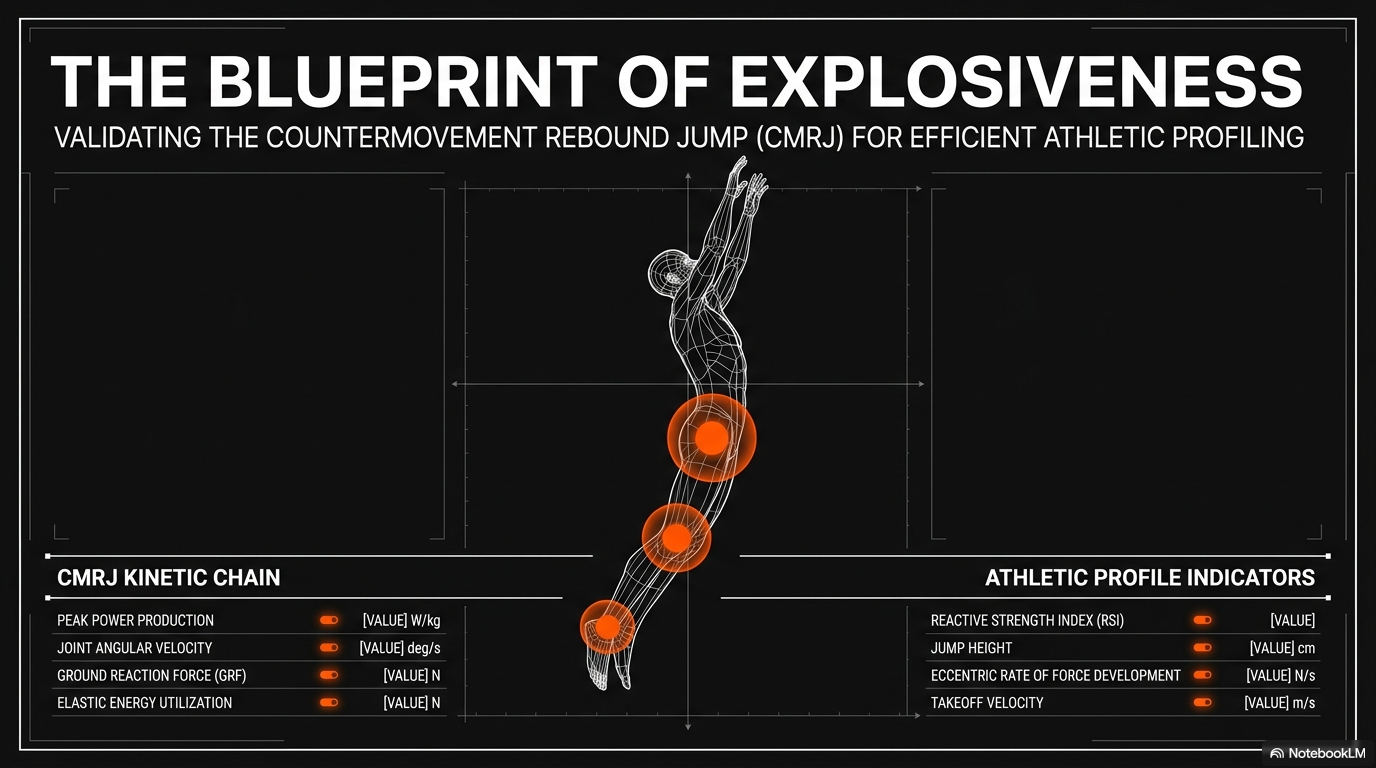
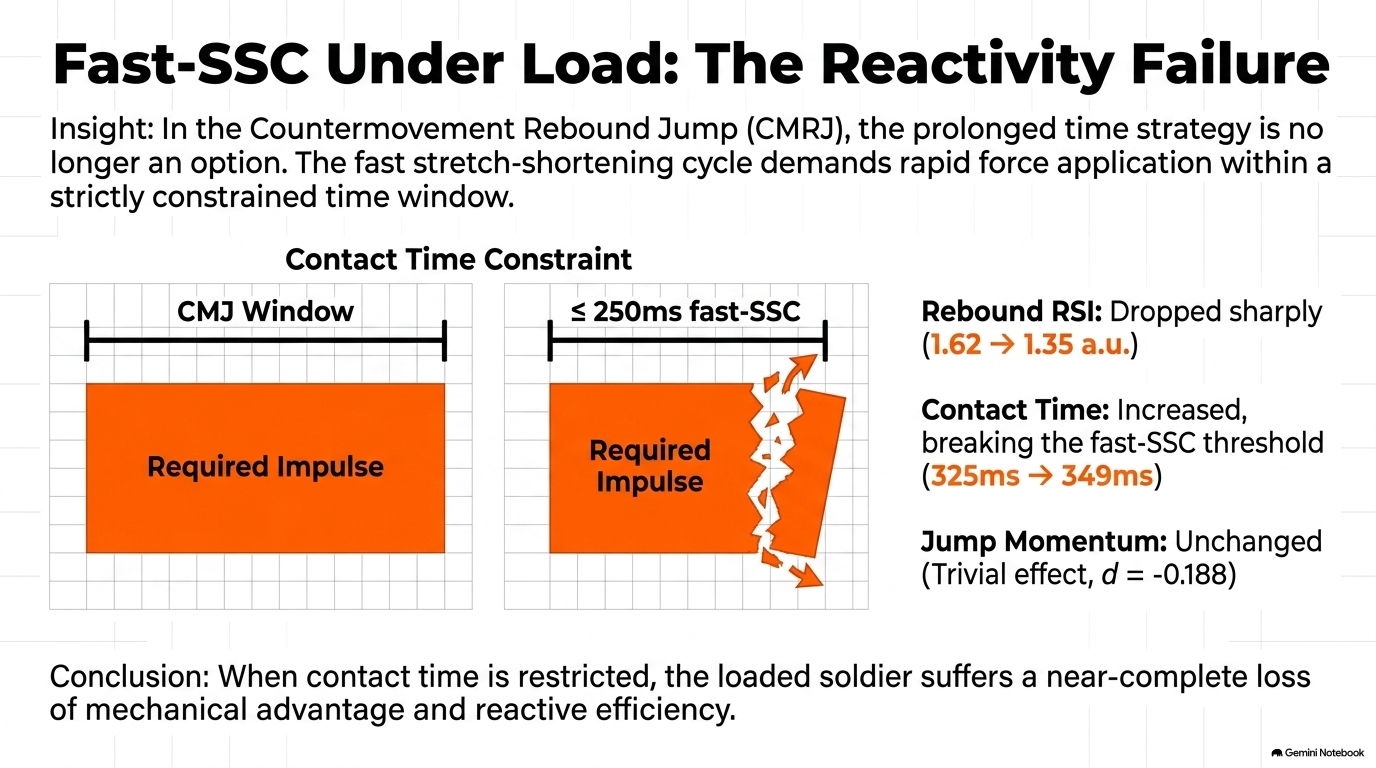
While the CMJ is stable, the Countermovement Rebound Jump (CMRJ)—a fast-SSC task involving a rapid "rebound" upon landing—is where the system breaks down. Under the 10.6 kg load, the reliability of rebound outcome metrics plummeted (ICC < 0.60).
This "rebound reality check" reveals that reactive power is disproportionately penalized by external loads. As ground contact time increases, the shifting mass of the vest and helmet creates trial-to-trial variability that "muffles" the data. For the coach, this means that while reactivity is vital for survival, it is much harder to measure and more easily disrupted by gear than traditional explosive power.
Takeaway 3: The "Constant Depth" Mystery and Joint Stress
A surprising finding in the data was that soldiers did not squat deeper to compensate for the extra 10.6 kg. Usually, more mass requires a longer "work distance" to generate impulse, but the countermovement depth showed only a "trivial effect" and remained constant.
Biochemically, this points to a "stiffening" strategy. The physical bulk of a ballistic vest likely restricts the range of motion, or the soldier subconsciously stiffens the trunk to stabilize the shifting load. Because the depth remains constant while the system mass increases, the impulse must be generated through higher peak forces over time. This translates to significantly higher joint-loading rates, making this "constant depth" a primary culprit for the high rates of overuse injuries seen in tactical populations.
Takeaway 4: The Absolute Force Trap
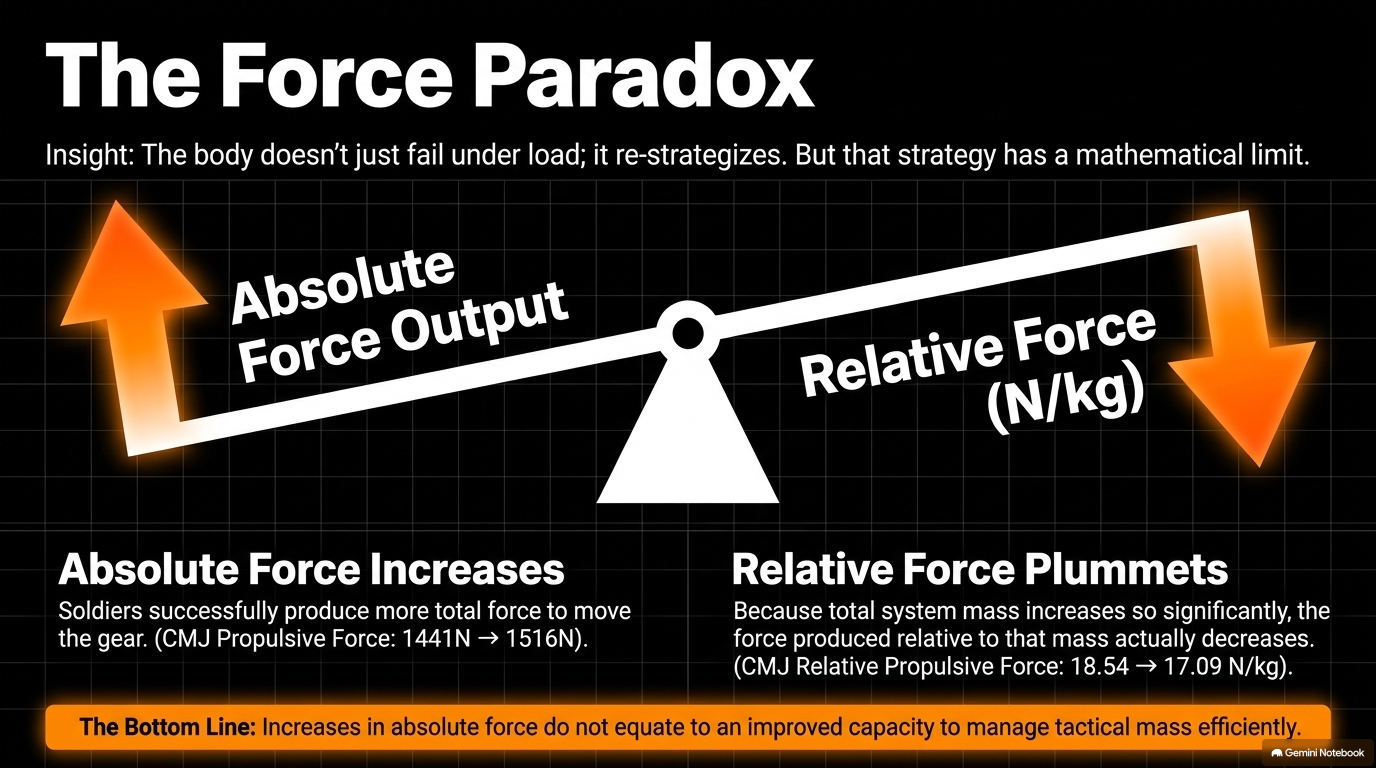
It is a common mistake to see a soldier producing higher total force on a force plate while wearing gear and assume they are getting "stronger." This is the "absolute force trap." While absolute force production increased under load, the relative mean propulsive force—the force produced per kilogram of total system mass—dropped significantly from 18.54 N/kg to 17.09 N/kg.
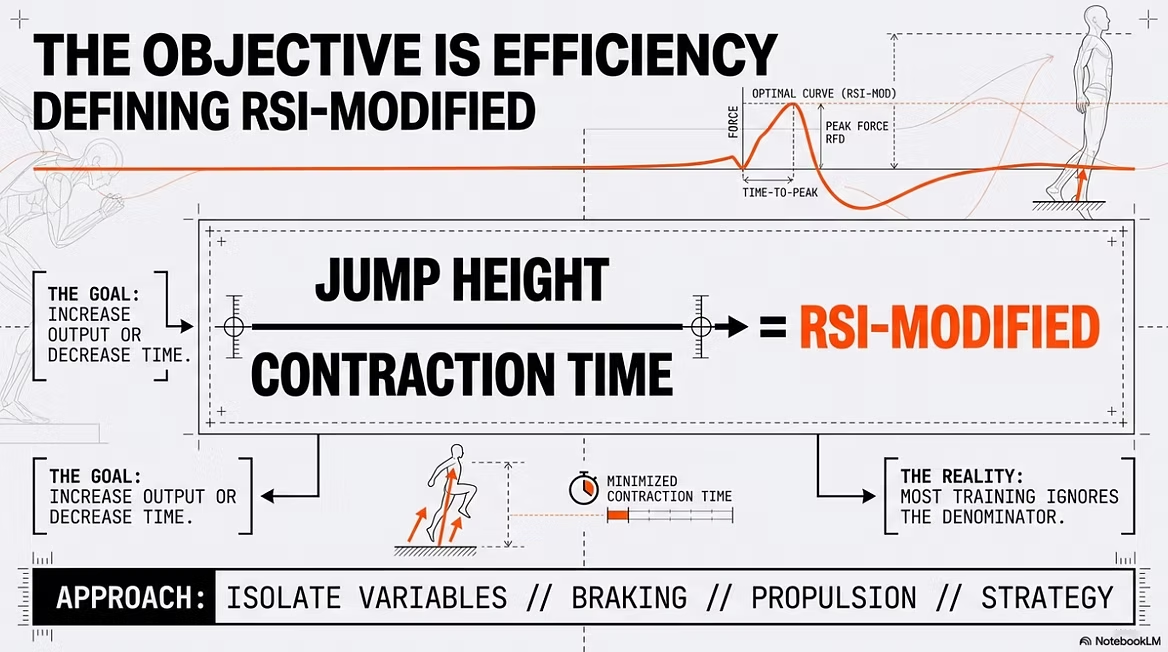
If a soldier cannot scale their force output to match the added 10.6 kg, efficiency evaporates. This was reflected in a universal performance penalty: jump height dropped by approximately 20.3% in the slow-SSC (CMJ) and 21.2% in the fast-SSC (CMRJ). More force is only a benefit if it maintains the power-to-weight ratio required for explosive maneuvers.
Takeaway 5: Taking the "Long Way" to Take-Off
When wearing a mission load, the body prioritizes stability over raw speed, shifting toward a time-dependent strategy. This is most evident in the braking phase duration, which increased significantly (p = 0.005).
Soldiers are essentially taking the "long way" to take-off. They spend more time in the eccentric-to-concentric transition to generate the impulse needed to move the extra mass. This represents a shift from an "explosive" strategy to a "force-oriented" one. While effective for getting off the ground, this prolonged braking phase is a massive drain on efficiency and compromises the rapid, reflexive power needed in high-stakes environments.
"Participants exhibited significant increases in time to take-off and braking phase duration, suggesting a need to prolong the impulse generation period to overcome the inertia associated with loaded conditions."
Takeaway 6: The Momentum Paradox and Eccentric Demand
The most fascinating finding was that even though the jumps were lower and slower, jump momentum actually increased (p = 0.044). This is the momentum paradox: the soldier is less "explosive," yet they are a much more formidable force in motion because the sheer mass of the soldier-plus-gear dominates the physics.
As a specialist, this tells me one thing: deceleration is the danger zone. A soldier in kit hits the ground with significantly higher momentum, which necessitates superior eccentric strength to manage the landing. Without specific training to handle this "heavy momentum," the risk of acute lower-limb injury during rapid stops or direction changes increases exponentially.
Conclusion: Training for the Burden
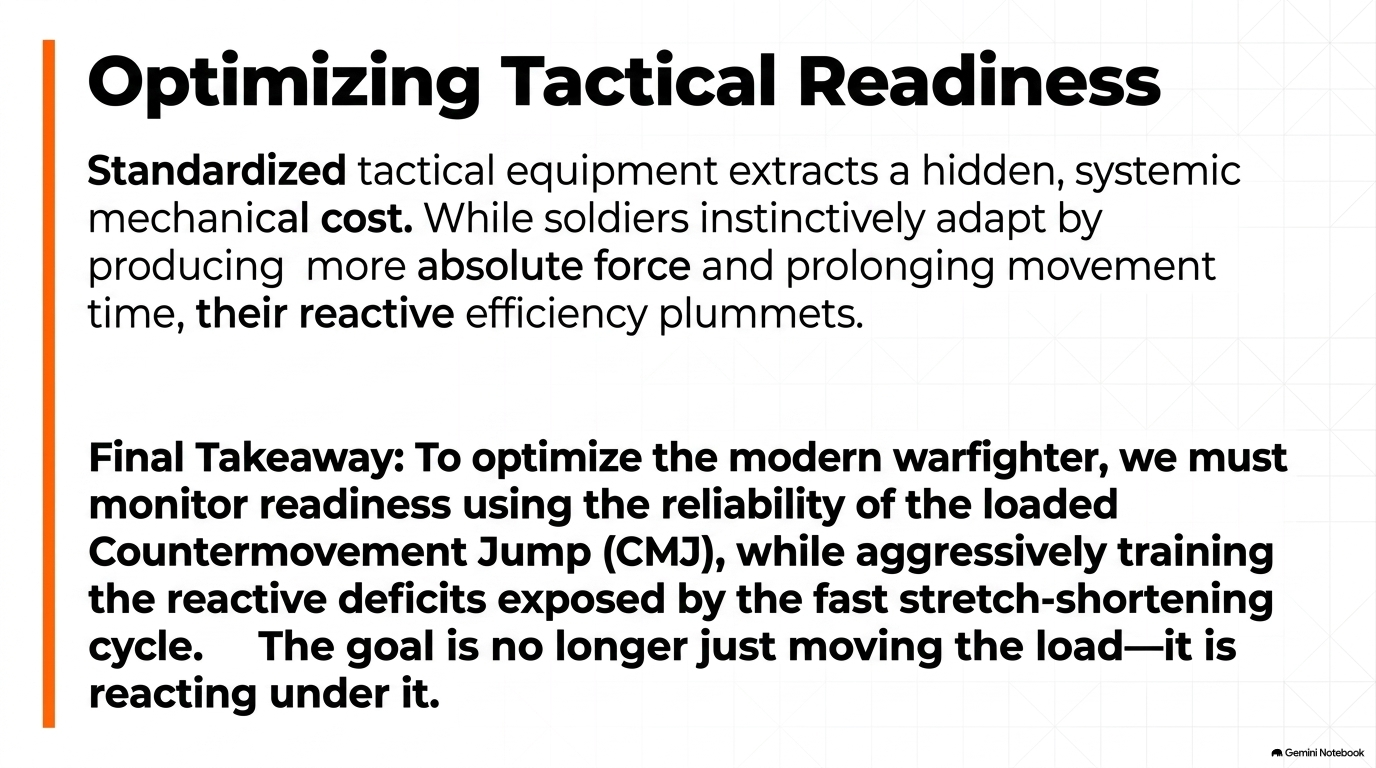
The data reveals a clear reality: tactical gear rewires movement toward slower, time-dependent strategies. To bridge this gap, we must stop training exclusively in "unloaded" environments. If the mission is performed under load, the preparation must be as well.
Training interventions should specifically target "reactivity under load" by incorporating loaded plyometrics and ballistic tasks. By exposing the neuromuscular system to the shifting mass of a vest during fast-SSC tasks, we can help soldiers maintain their rapid force application capabilities and minimize the 20% performance penalty imposed by their gear.
As we modernize the force, we have to ask: Is it time to retire the unloaded push-up and sit-up as markers of readiness, and instead embrace high-tech biomechanical monitoring that reflects the true, heavy reality of the mission?
Article Reference
Ceniza-Villacastín, J. A., Soriano, M. A., Alonso-Aubín, D. A., Godoy-López, J. R., & Jiménez-Ormeño, E. (2026). Force plate assessment of neuromuscular jump performance under loaded and unloaded conditions in military personnel. Sensors, 26(7),