
August 10, 2026
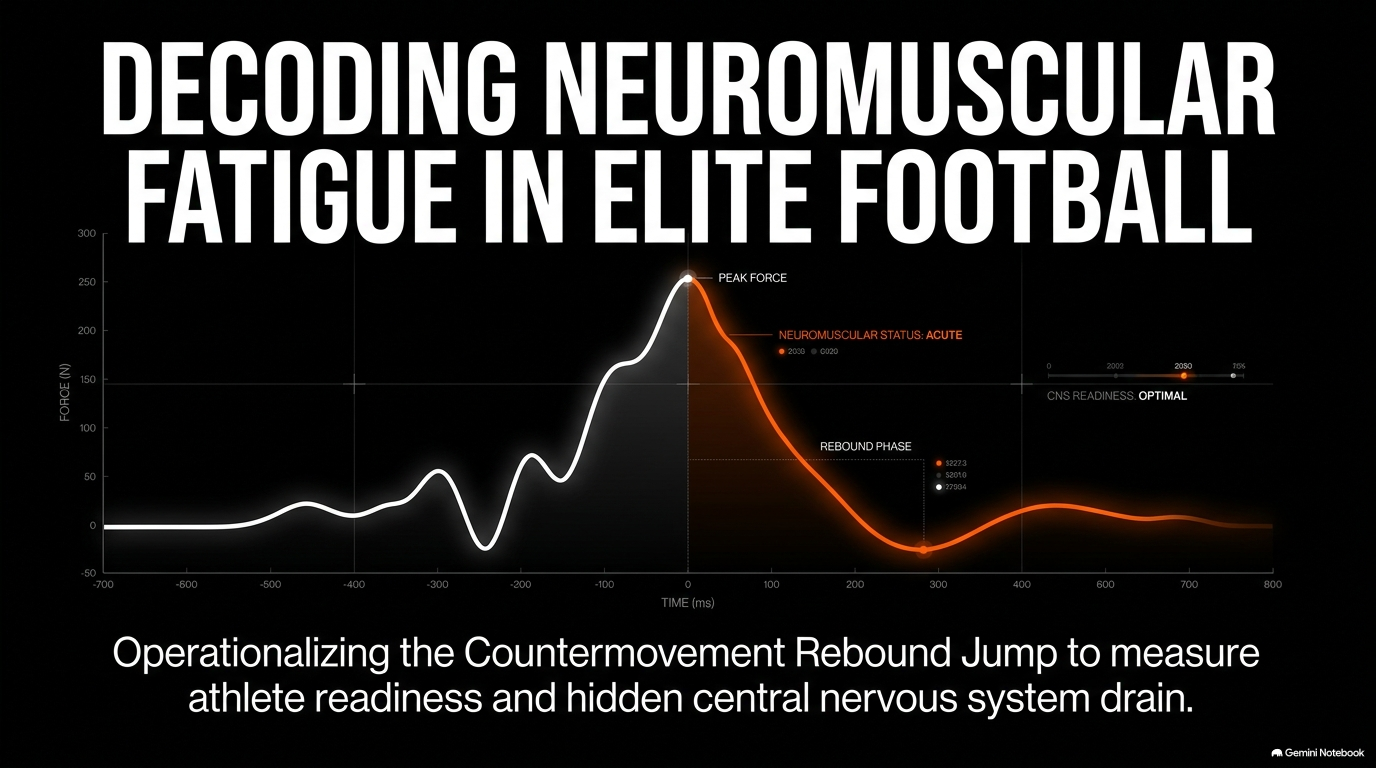
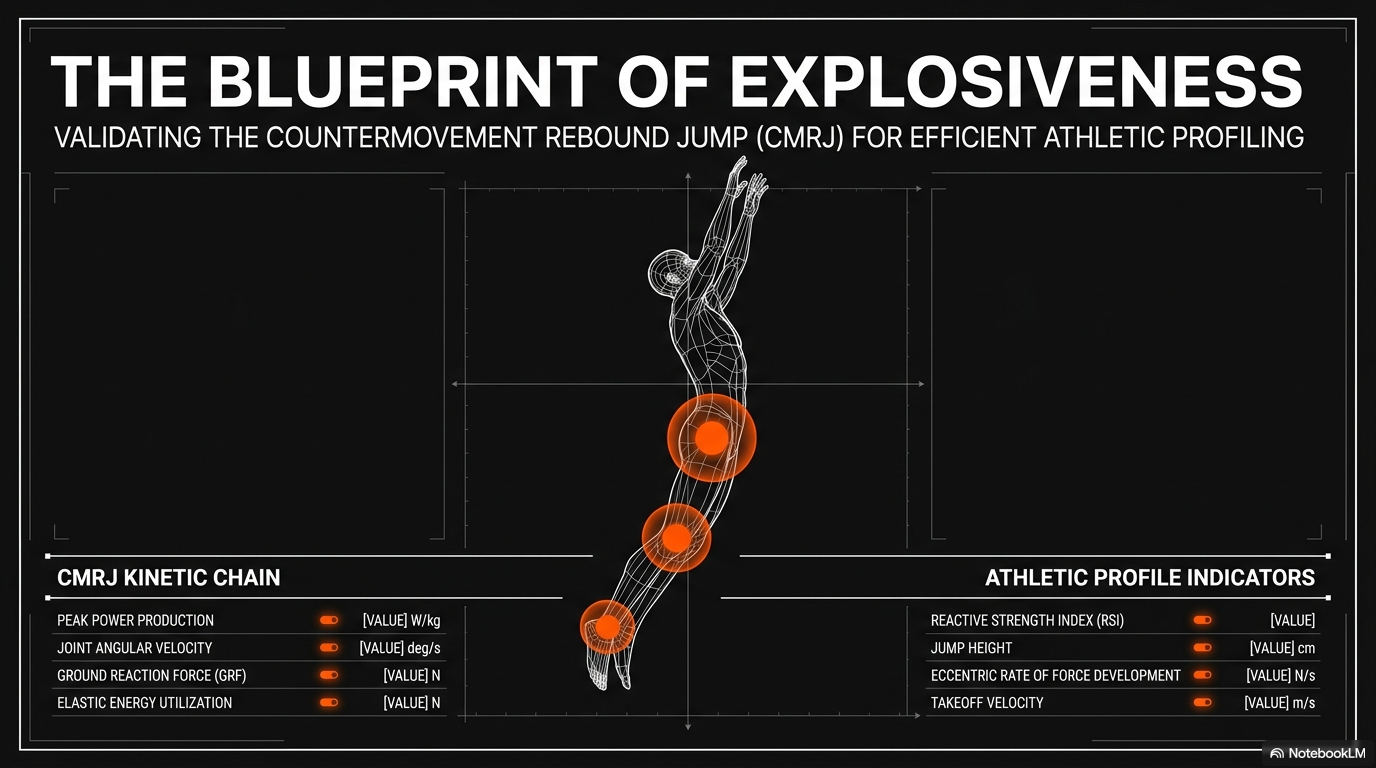
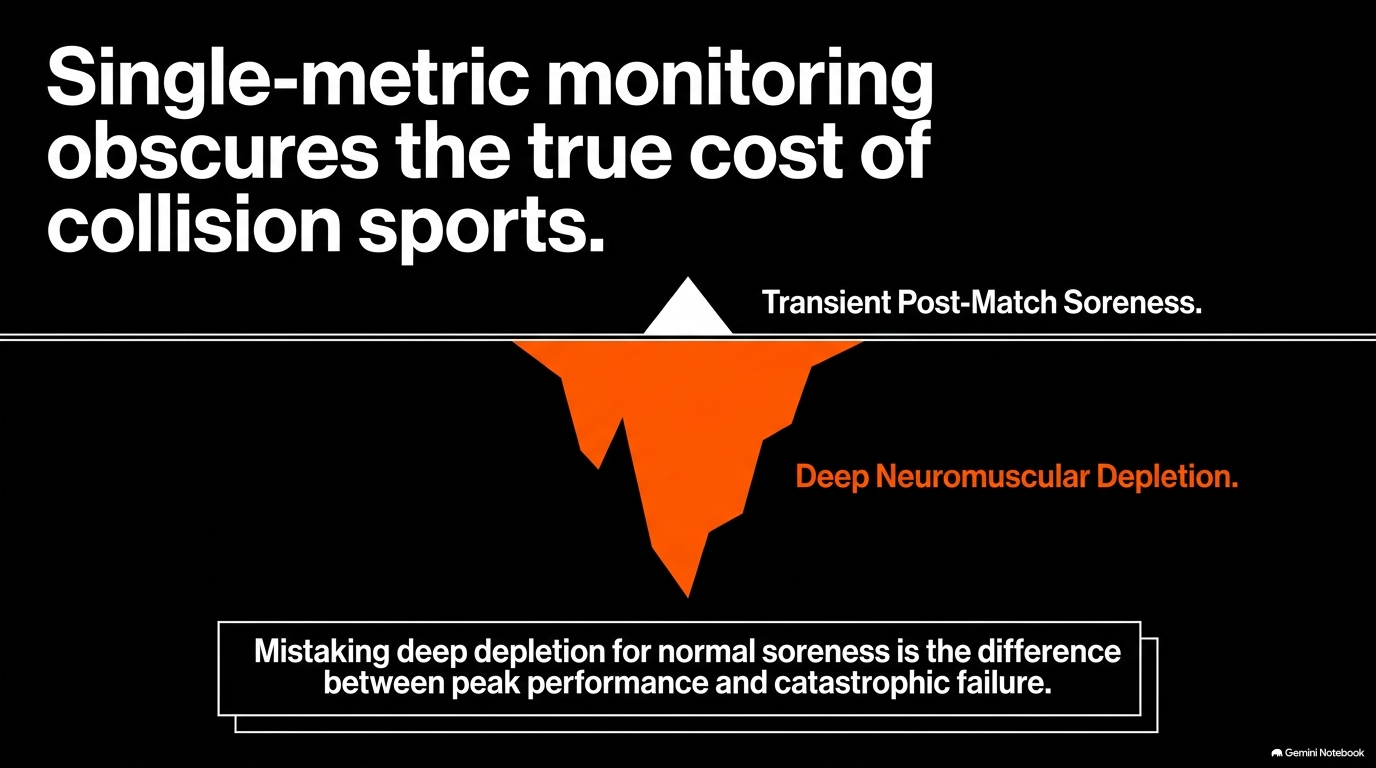
In elite collision sports like American football, the ability to differentiate between transient post-match soreness and deep neuromuscular depletion is the difference between peak performance and preventable injury. This framework utilizes a dual-assessment approach to separate athlete capacity from strategy. We leverage the Countermovement Rebound Jump (CMRJ) to capture immediate reactive strength and Stretch-Shortening Cycle (SSC) efficiency, while using the Countermovement Jump (CMJ) to track the long-term restoration of gross mechanical output. By integrating these tests, we move beyond the limitations of single-metric monitoring to provide a multidimensional view of athlete readiness.
Core Objectives of the Protocol
Success in monitoring hinges on moving from raw data to technical precision; the following procedures are mandatory to ensure the integrity of our performance insights.
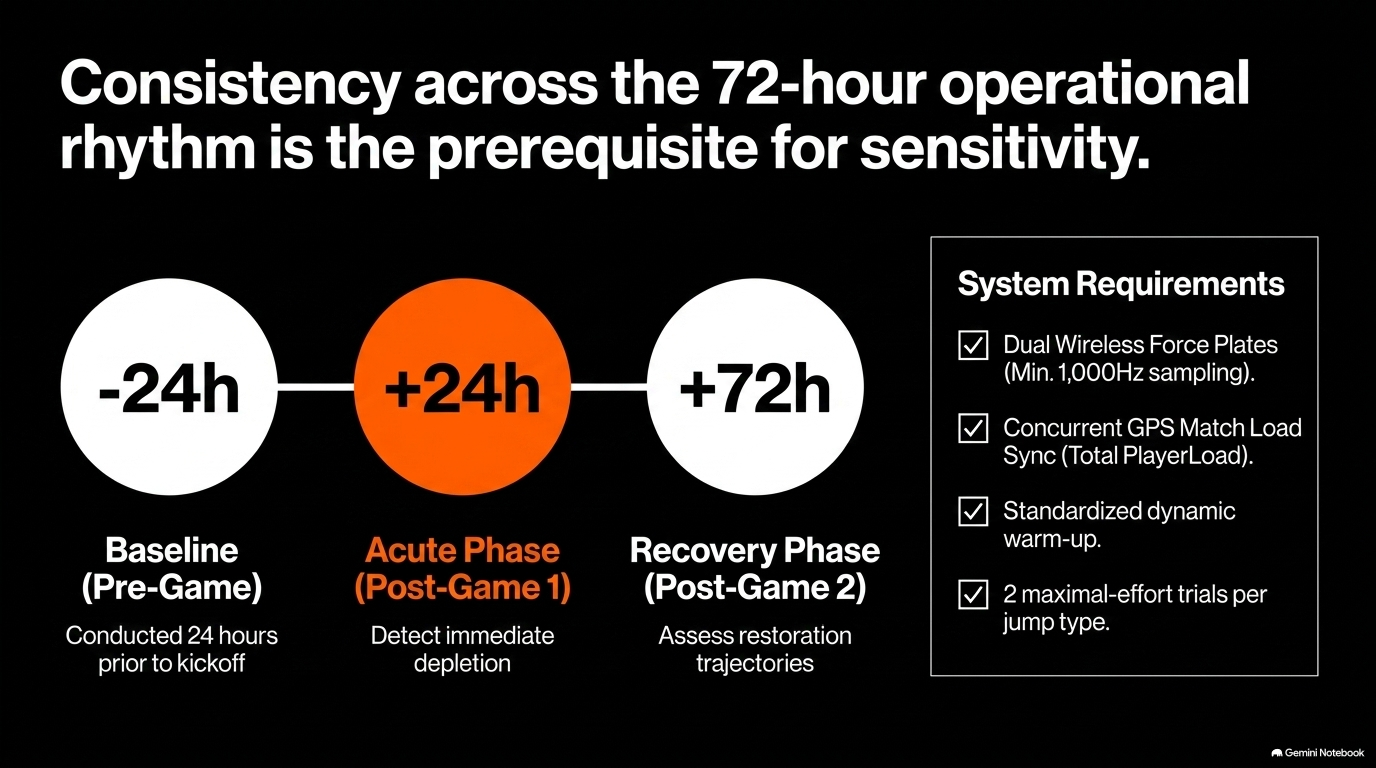
Consistency is the prerequisite for sensitivity. To minimize "noise" and ensure that fluctuations in force plate data reflect physiological status rather than testing variability, we adhere to a rigid longitudinal schedule. This protocol was validated in NCAA Division I environments to ensure maximal reliability with minimal disruption to the training week.
The Monitoring Timeline
Equipment and Execution Checklist
These procedural standards are the foundation for the high-sensitivity data captured in the critical 24-hour acute fatigue window.
The first 24 hours post-competition represent the "red zone" for neuromuscular status. Research indicates that the CMRJ is significantly more sensitive to acute fatigue in this window than the standard CMJ. Specifically, we monitor decrements in reactive strength and power as primary indicators of system depletion.
CMRJ Sensitivity: 24 Hours Post-Match
Metric
Significance (p-value)
Effect Size (Cohen’s d)
Average Power
0.001
0.67
RSImod (Reactive Strength Index)
0.03
0.49
Jump Height
0.046
0.46
Interpretation: The "So What?" Factor A drop in CMRJ Average Power (d=0.67) and RSImod (d=0.49) at 24 hours functions as an immediate "red flag." These metrics indicate a compromised ability to handle reactive loads. Practitioners must also recognize the expected recovery baseline: Average Power typically recovers by 72 hours (p=0.002, d=-0.63). If an athlete fails to meet this recovery benchmark, they are an outlier requiring immediate intervention. Detecting this acute "power drop" is essential, but the final management decision depends on the athlete's individual recovery path.
While the CMRJ detects the "hit," the CMJ tracks the "recovery." Strategically, we must understand that external match load (GPS PlayerLoad) does not just cause fatigue—it moderates the speed of restoration. High-load athletes may return to baseline jump height but still exhibit compromised movement strategies.
The Impact of Match Load on Recovery Linear mixed-effects modeling reveals that PlayerLoad acts as a significant moderator for recovery trajectories at the 72-hour mark. We focus on two critical metrics:
The TTO Red Flag: Athletes with high PlayerLoad often exhibit a longer TTO at 72 hours. This signifies an altered jump mechanic; the athlete is "finding a way" to reach jump height by slowing down the movement. Do not be misled by CMJ Jump Height, which often increases by 72 hours (d=-0.49). If Jump Height is normal but TTO is high and RSImod is low, the athlete is technically inefficient and still carrying significant residual fatigue.
Individualizing recovery protocols enhances player readiness and mitigates the cumulative fatigue that leads to mid-season soft-tissue injuries.
Decision Matrix for Neuromuscular Status
Assessment Result
Interpretation
Actionable Intervention
Scenario A: Low CMRJ at 24h; Normal recovery by 72h.
Standard Fatigue: Normal physiological response to competition.
Proceed with standard training; resume full-intensity loads at 72h.
Scenario B: Normal/High CMJ Height but High TTO and Low RSImod at 72h.
Load-Dependent Fatigue: Athlete is compensating; mechanical inefficiency is present.
High Alert: Modify training; focus on movement quality; delay high-velocity/reactive loads until TTO normalizes.
Practical Applications for Practitioners
Final clearance for full-intensity training must be predicated on the restoration of mechanical efficiency (TTO), not just the recovery of gross output (Jump Height).

Reference
Talpey, S. W., Haintz, L., Drake, M., Mundy, P. M., Rayner, R., James, L. P., O’Grady, M., Gabbett, T. J., & Gardner, E. C. (2026). The utility of the countermovement rebound jump for the assessment of neuromuscular status in National Collegiate Athletic Association Division I American football players. Journal of Strength and Conditioning Research, 40(6), 682–688