
October 26, 2026
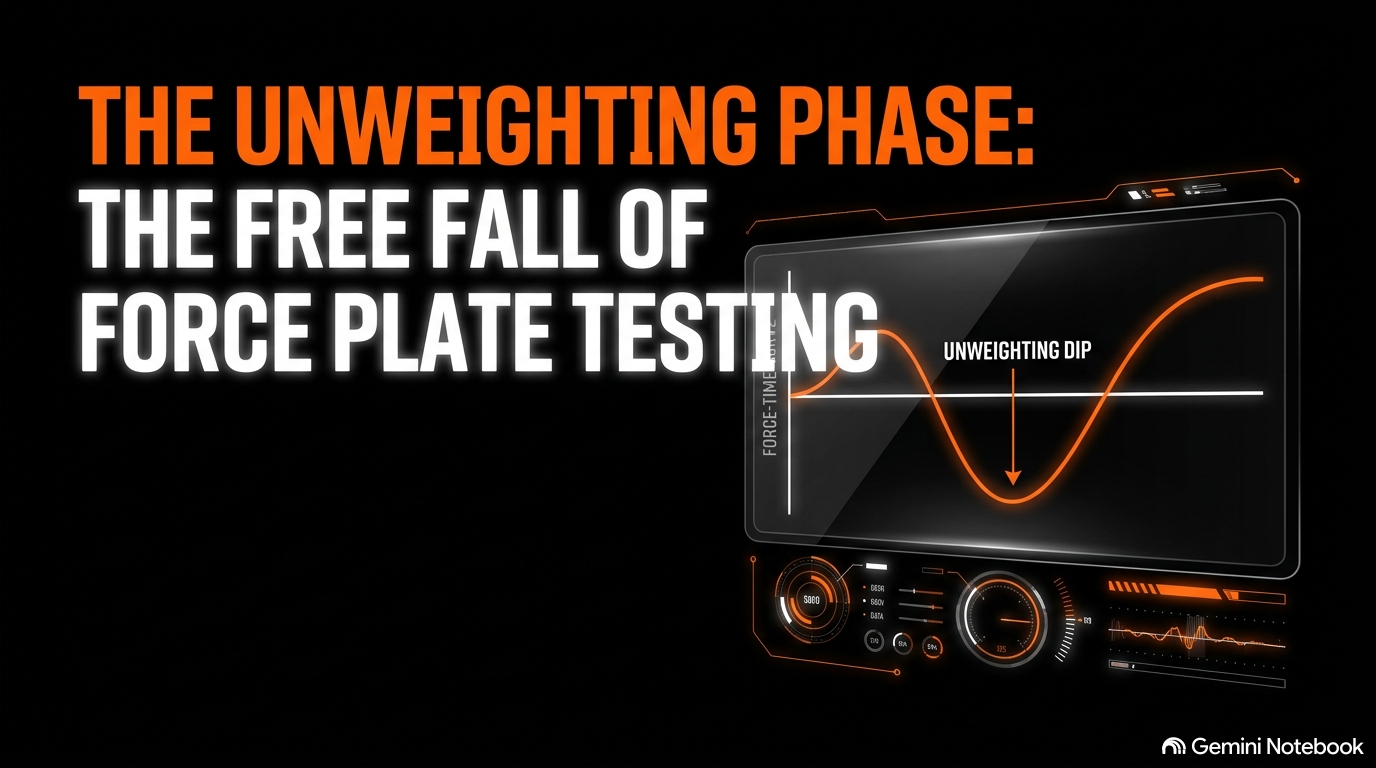
Following the static baseline established during the quiet phase, the countermovement jump (CMJ) transitions into its second critical window: the unweighting phase. Frequently characterized as a controlled "free fall," this phase begins when anti-gravity muscles relax, dropping vertical ground reaction force below baseline body weight as the athlete descends into their countermovement. Understanding unweighting mechanics—including minimum force, downward center-of-mass velocity, and the Equal Area Law—reveals how an athlete's drop speed and depth dictate downstream braking capacity, propulsive power, and overall jump performance.
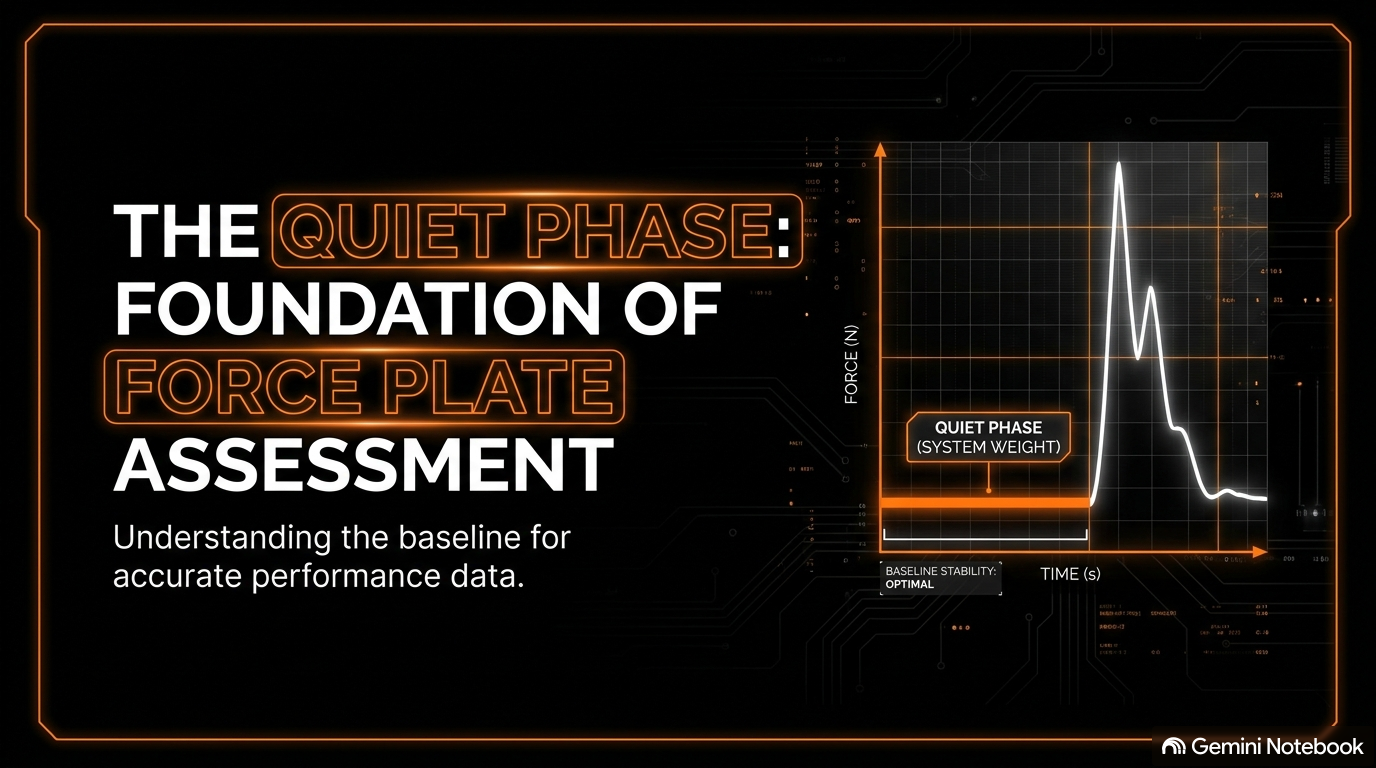
In countermovement jump assessment on dual force plates, explosive propulsion receives the majority of attention from coaches and sports scientists. However, the energy that fuels explosive jumping is accumulated during the preceding downward movement. Once an athlete completes the motionless quiet phase, they initiate the jump by rapidly relaxing their anti-gravity musculature.
This initiation marks the onset of the unweighting phase—the period during which vertical ground reaction force dips below baseline System Weight. Because the athlete is effectively dropping faster than gravity alone would pull them if supported, they enter a state of unweighting. Analyzing this phase provides practitioners with crucial insights into an athlete's movement strategy, motor control, and preparation for force absorption.
The unweighting phase begins at movement onset, typically defined in force plate software as the exact millisecond when measured vertical force drops below a standardized threshold (for example, 20 Newtons below baseline System Weight).
Physiologically, this phase is driven by the rapid relaxation of agonist muscles (such as the quadriceps, gastrocnemius, and soleus), resulting in combined flexion of the hips and knees alongside ankle dorsiflexion. As muscular support is momentarily withdrawn, the athlete's center-of-mass (COM) begins to accelerate downward.
Key mechanical features of the unweighting phase include:
A foundational principle of force plate analysis is that early phases directly dictate late phases through impulse calculations. Impulse represents force multiplied by time, visually reflected as the area between the force-time curve and the baseline System Weight line.
During unweighting, the force curve drops below System Weight, creating a negative area known as Unweighting Impulse.
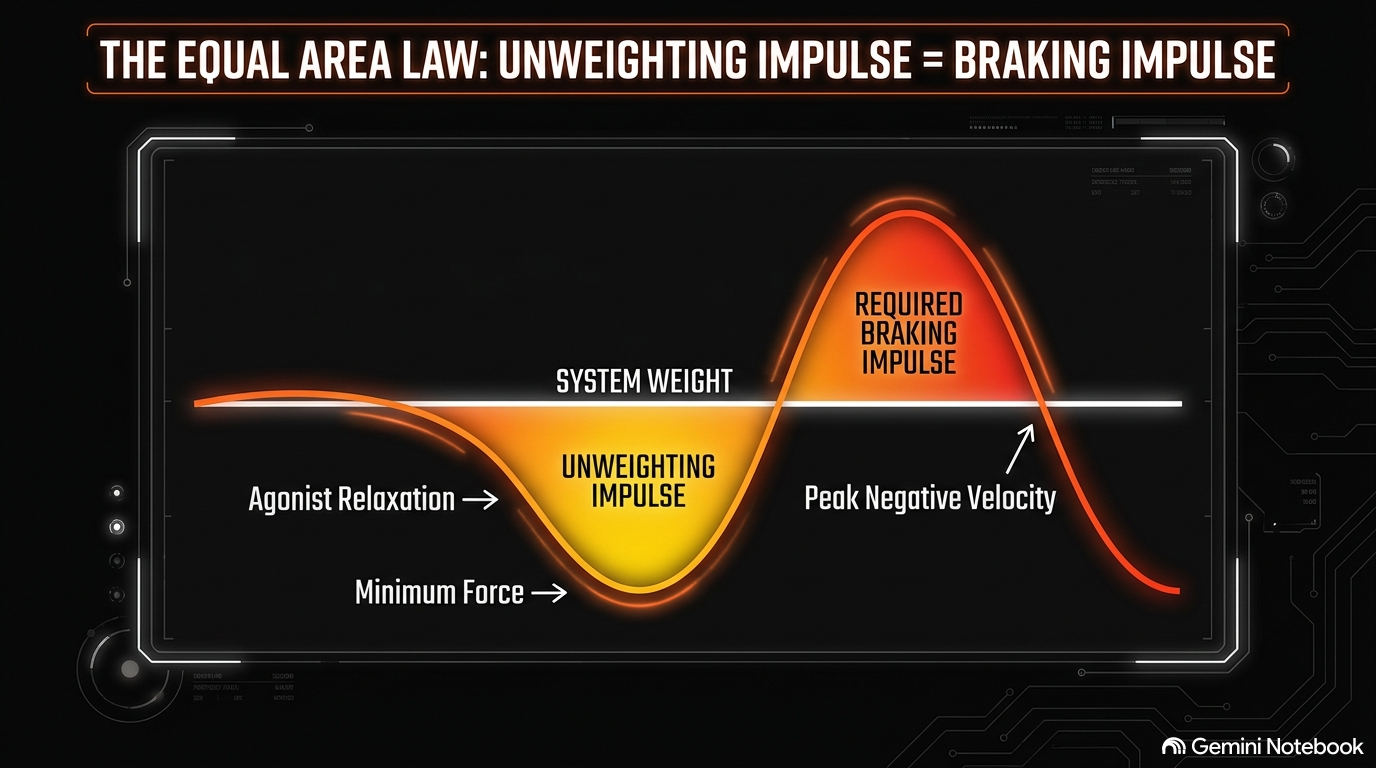
According to impulse-momentum principles, the total negative impulse generated during unweighting mathematically equals the positive net impulse required during the subsequent braking phase to bring downward center-of-mass velocity back to zero.
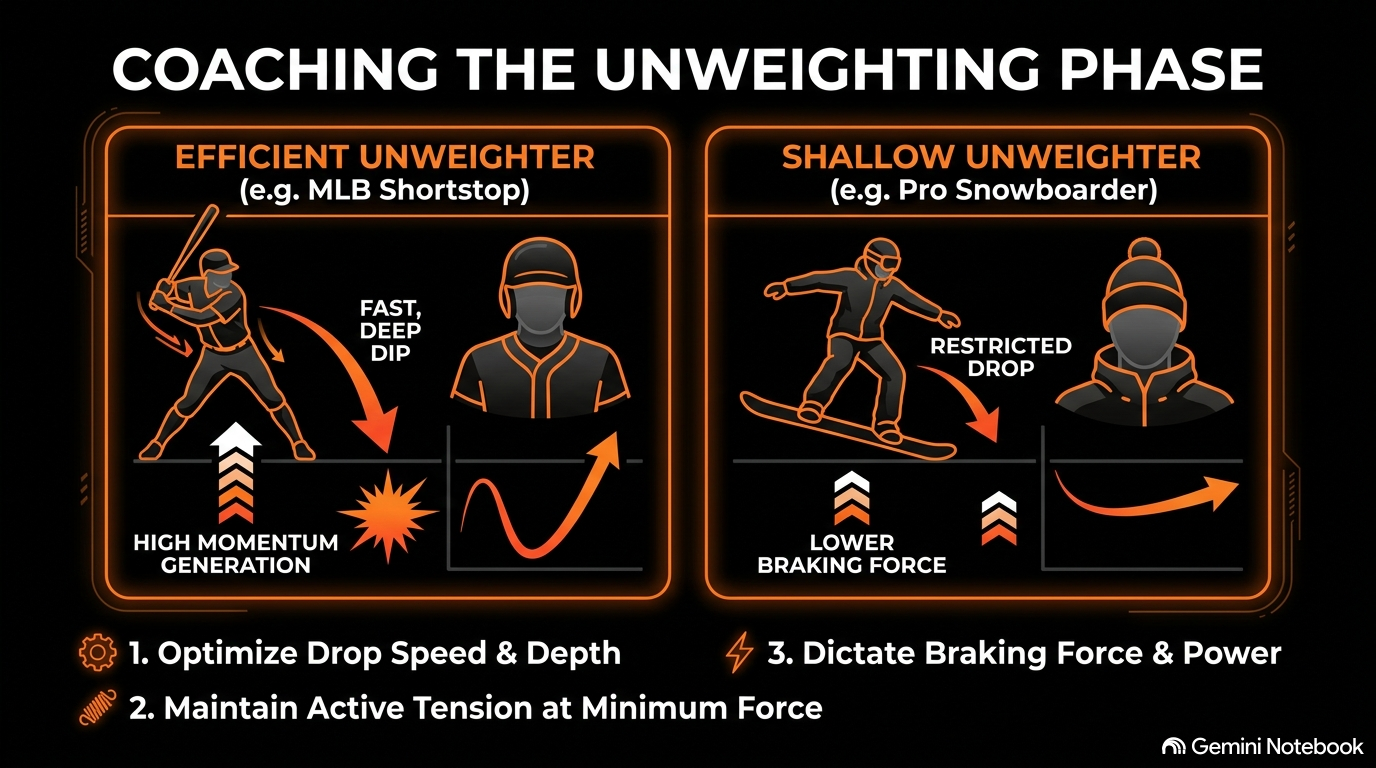
If an athlete hesitates, drops tentatively, or cuts their countermovement short, they produce a shallow unweighting impulse. This shallow impulse restricts the momentum entering the braking phase, inherently limiting the athlete's ability to store elastic strain energy and generate high braking forces. Conversely, a fast, confident unweighting phase generates substantial momentum, setting the stage for high force absorption and elastic energy return.
Not all athletes utilize the unweighting phase in the same manner. Movement strategies vary widely depending on an athlete's sport demands, limb lengths, and neurological profile.